Merve Gül Aydoğan Ağlarcı
07 May 2026•Update: 07 May 2026
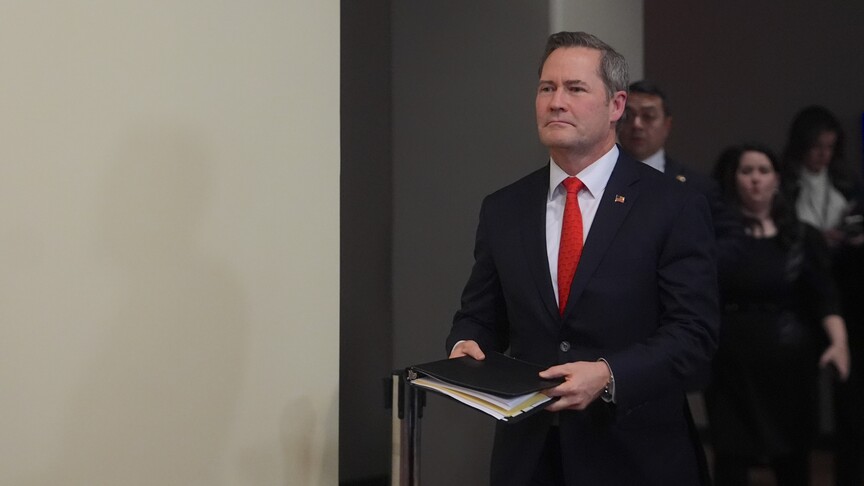
The US envoy to the UN argued Thursday that Iranian actions in the Strait of Hormuz violate "the most basic law of the sea," noting that it sets a "very, very dangerous precedent."
At a joint news conference with the representatives of Bahrain, the United Arab Emirates, Qatar, Kuwait and Saudi Arabia, Mike Waltz said a draft resolution announced earlier this week on the Strait of Hormuz focuses on the "freedom of navigation for the entire world's economies."
Arguing that the "cornerstone of worldwide stability and commerce" is at stake, Waltz said, "Those who abuse it or seek to throw it out are setting a very, very dangerous precedent, and frankly, setting the stage to doom global trade."
He claimed that Iran's alleged mining and tolling efforts are a violation of "the most basic law of the sea."
Saying that the draft resolution asks Iran to "cease its attacks on commercial shipping, cease mining and remove its mines from an international waterway," he indicated that the document asks Iran to halt "charging illegal tolls" in the strait.
"It's really just that simple," he added.
He continued by comparing hostilities with Iran on the strait to a hypothetical scenario between Spain and Morocco, saying that if either country were to "throw sea mines into the Straits of Gibraltar and then start trying to charge shipping to pass through" in a bid for have leverage against the other, it would amount to "collective punishment of the entire world," something he called "unacceptable, immoral, and illegal in international law."
"We have to address these violations here in the Council, and we have to ask ourselves: If a country chooses to oppose such a simple proposition, do they really want peace as energy and food costs rise for the world's peoples?" asked Waltz.
Waltz said the US and its partners are bringing the draft resolution to the Security Council. "We're giving the UN and the Security Council another chance to get back to basics, to uphold these basic principles, to build on resolution 2817," he said,
Asked how the draft resolution differs from US efforts to block the Council’s action on the Gaza Strip while leading its own negotiations, Waltz pushed back on the comparison, arguing that even if Pakistan succeeds in mediating a deal around Iran's nuclear program, "the world is still going to have a problem with sea mines laid by Iran floating around in the ocean."
"Regardless of those negotiations," he added, the international community must "set a precedent that regardless of the conflict or the parties going forward, you cannot" mine international waterways.
Regional tensions have escalated since the US and Israel launched strikes against Iran on Feb. 28, triggering retaliation from Tehran against Israel as well as American allies in the Gulf, along with the closure of the Strait of Hormuz.
A ceasefire took effect April 8 through Pakistani mediation, but talks in Islamabad failed to produce a lasting agreement. The truce was later extended by Trump without a set deadline.
The US has enforced a naval blockade targeting Iranian maritime traffic in the strait since April 13.
Trump announced Tuesday that the US military will temporarily pause "Project Freedom" to restore freedom of navigation for commercial shipping through the Strait of Hormuz, and said the American blockade will remain "in full force and effect."