Ayhan Simsek
20 August 2026•Update: 20 August 2026
Germany’s natural gas storage facilities are only about half full, the lowest level for this time of year in recent years, prompting opposition politicians to warn that Europe’s largest economy could face tighter supplies if winter turns severe.
Storage sites stood at roughly 50% capacity as of Wednesday, according to the energy regulator Bundesnetzagentur—about 26 percentage points below the average for recent years. German rules generally require facilities to reach 80% by Nov. 1, though limited exceptions exist.
“In such an uncertain world market situation, relying on a mild winter or functioning LNG markets so that half-empty storage facilities will be enough is a gamble,” Joerg Cezanne, energy policy spokesman for the opposition Left Party, told Rheinische Post daily.
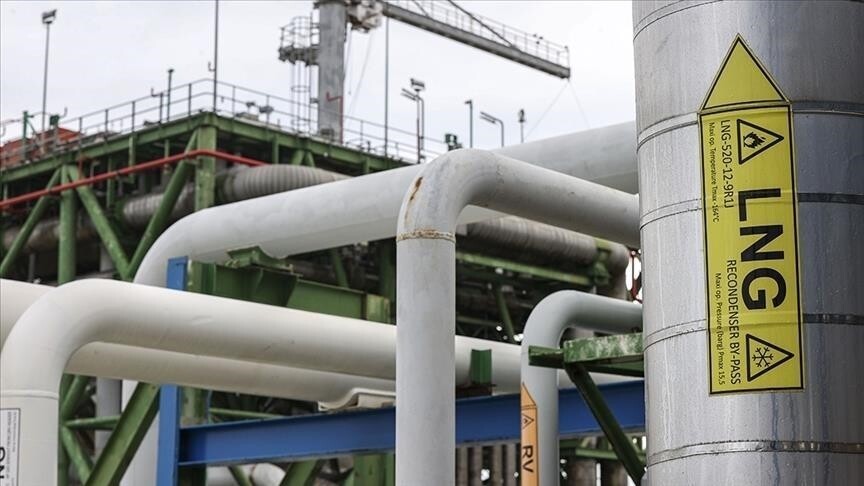
Michael Kellner, a Green Party politician and former state secretary at the Energy Ministry, cautioned against assuming liquefied natural gas imports will always proceed without disruption.
“Last year we had the case that an LNG terminal was unable to operate because the Baltic Sea was frozen over,” he said. “Then they sent an icebreaker. The icebreaker broke down. The terminal was shut for several weeks, I think two or three weeks. And things like that can happen.”
Klaus Muller, president of the Bundesnetzagentur, called the current level unsatisfactory. “The gas storage facilities reached 50% filling 50 days later than last year,” he wrote on social media. “That means around 123.4 TWh is stored, but that cannot satisfy us. That’s why it is important that gas traders meet their responsibility toward their customers for the winter.”
Traders normally buy gas in summer, when prices are lower, and sell it in winter. This year, relatively high prices have reduced the incentive to stock up. The closure of the Strait of Hormuz has also disrupted shipping, curtailing oil and gas cargoes through one of the world’s busiest energy corridors.
Despite the concerns, officials told public broadcaster ARD that Germany is not facing a crisis on the scale of the one that followed the start of the Ukraine war in February 2022. Before the war, Russia supplied nearly 55% of Germany’s natural gas. Berlin has since replaced most of that volume with supplies from Norway, Belgium, and France, along with LNG imports, largely from the United States.