Ali Canberk Ozbugutu and Emir Yildirim
14 August 2026•Update: 14 August 2026
Global markets welcomed moderate US inflation data released this week, while strong corporate earnings also fueled risk appetite, but continued uncertainty over efforts to reach peace in the Middle East limited optimism.
The US Producer Price Index (PPI) remained unchanged month-on-month but rose 4.7% on an annual basis in July, below estimates, while energy prices continued to decline.
The ongoing decline in the energy component of US consumer inflation also strengthened expectations that forward-looking price pressures could ease.
Expectations for Fed rate hikes were pushed back to December as the New York Stock Exchange closed at record highs and the US Dollar Index eased below the 100 threshold.
The Fed is increasingly expected to keep its policy rate unchanged next month, while the probability of a rate hike stands at 54% in October and 92% in December.
Cleveland Fed President Beth Hammack reiterated that rate hikes are needed to bring down persistently high inflation.
Meanwhile, continued uncertainty over diplomatic efforts to end the US-Iran conflict in the Middle East remained on investors’ radar.
The US 10-year Treasury yield fell five basis points to 4.66%, while the US Dollar Index was trading sideways at 99.8. Gold was down 0.6% at $4,324 per ounce on Friday despite waning rate hike expectations, amid delays in reaching peace in the Middle East, profit-taking and a shift toward riskier assets led by the technology sector.
October-delivery Brent crude was trading flat at $87.10 a barrel at the same time.
Investors also turned their attention to corporate financial results during the ongoing earnings season.
US technology company Cisco reported results above estimates, but its shares fell 8.4%, while the recovery in artificial intelligence (AI) stocks on the US market continued.
The S&P 500 gained 0.65% and reached a new record, the Nasdaq rose 0.81%, and the Dow Jones Industrial Average gained 0.13% on Thursday. US indexes opened Friday on a mixed course.
In Europe, risk appetite was dampened by high oil prices.
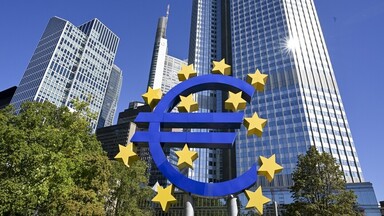
European statistical office Eurostat is set to release second-quarter growth estimates for the EU and the eurozone on Friday.
The eurozone’s gross domestic product (GDP) is expected to grow 0.4% on a quarterly basis and 1% year-on-year.
The eurozone’s industrial production remained flat on a monthly basis but increased 0.1% year-on-year.
The UK economy grew 0.4% in the second quarter from the previous quarter, while industrial production fell 0.5% in June, a larger-than-expected decline.
Coal’s share of EU electricity generation fell to 9.2% last year, its lowest level on record.
The UK’s FTSE 100 fell 0.56%, France’s CAC 40 declined 0.28%, and Germany’s DAX 40 was down 0.12%, while Italy’s FTSE MIB 30 remained flat on Thursday. European indexes opened Friday mixed.
Asian equity markets also traded mixed amid uncertainty over peace efforts in the Middle East, high energy prices and corporate developments.
China’s Semiconductor Manufacturing International Corporation (SMIC) raised prices amid strong AI demand, pushing its shares up 1.9%.
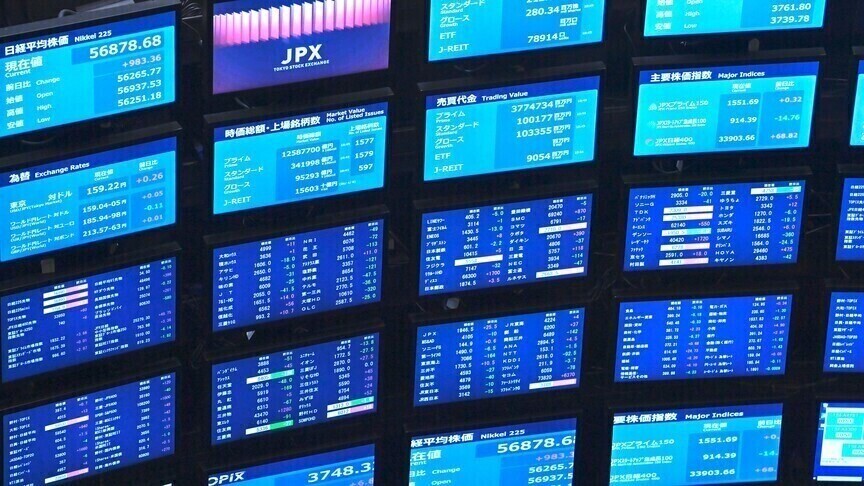
Near Friday’s close, Japan’s Nikkei 225 gained 0.3% and South Korea’s Kospi rose 1.5%, while China’s Shanghai Composite fell 0.5% and Hong Kong’s Hang Seng declined 1.1%.