Burhan Sansarlioglu and Emir Yildirim
21 August 2026•Update: 21 August 2026
Global markets traded on a mixed trend on Thursday due to the inflationary environment and high government spending, while the US Treasury’s plan to lower borrowing costs came to the fore as a temporary solution as high energy prices continued fueling inflation fears.
Investors are skeptical about the impact of the US Treasury’s intervention in the bond market, as the decision to expand long-term bond buyback operations may not reduce risks.
US Treasury Secretary Scott Bessent said the buyback operations for long-term bonds could exceed $4 billion, while the department is ready to impose the harshest sanctions against Tehran, in line with US President Donald Trump’s statements about some sort of economic operation against Iran, fueling concerns over geopolitical tensions.
Additionally, San Francisco Fed President Mary Daly said she has seen little evidence that there is a need for a preemptive rate hike, while St. Louis Fed President Alberto Musalem said gradual rate hikes are preferable.
Meanwhile, US initial jobless claims fell 6,000 to 206,000 in the week ending Aug. 15, below market estimates.
The US 10-year Treasury yield rose above 4.7%, and the 30-year bond yield climbed from 5.2% to 5.26%. The US Dollar Index is trading down 0.1% at 98.8 due to high public debt and bond market concerns.
Investor demand for the dollar declined as the US economic administration adopted a more interventionist stance toward markets.
The falling dollar supported gold, driving up the precious metal by 0.4% to $4,535 per ounce.
At the same time, US retail giant Walmart’s shares fell 9.2% after its sales forecasts did not meet expectations.
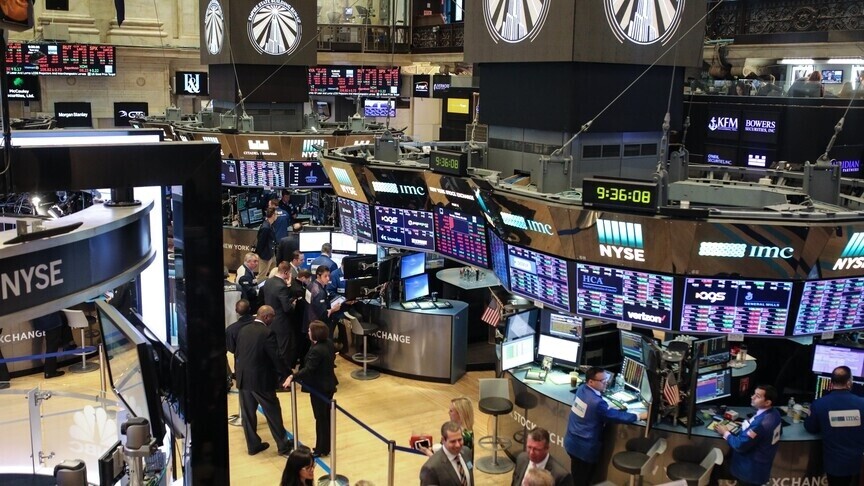
The New York Stock Exchange closed lower on Thursday, as the Dow Jones Industrial Average lost 0.15%, the S&P 500 dropped 0.45%, and the Nasdaq was down 0.45%. American indexes started Friday on a positive note.
Meanwhile, European stocks traded mixed on Thursday amid geopolitical uncertainties and the worsening energy crisis.
Europe’s Purchasing Managers’ Index (PMI) data to be released on Friday will show the impact of the rise in oil and natural gas prices since August.
Germany’s five-year bond yield hit 3.008%, its highest since 2008, while public debt in the country is expected to reach new records due to expectations of increased defense spending.
September-dated contracts on the Dutch virtual gas trading hub TTF hit $56.9, marking the highest level since March and fueling risk aversion on the continent.
Germany’s Producer Price Index (PPI) rose 1.1% month-on-month and 3% on an annual basis in July, above estimates, following a 0.3% decline on a monthly basis and a 1.8% rise year-on-year in June.
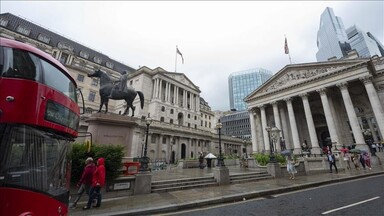
France's CAC 40 fell 0.57% and Germany's DAX 40 dropped 0.42%, while Italy's FTSE MIB 30 climbed 0.09% and the UK's FTSE 100 gained 0.04% on Thursday. European indexes started Friday on a negative trend.
Asian equity markets traded mixed near Friday’s close amid bond market risks and geopolitical uncertainties.
Japan’s July inflation reached its highest level since December at 1.9% amid rising energy prices, fueling estimates that the Bank of Japan (BoJ) may hike rates in September.
The Tokyo consumer price index (CPI) data to be released next week will provide further insight into the potential policy roadmap of the BoJ.
Samsung Electronics shares rose 3.7% after the company announced a $72 billion shareholder return plan.
Near Friday’s close, Japan’s Nikkei 225 fell 0.5%, while South Korea’s Kospi gained 0.7%, Hong Kong's Hang Seng was up 0.7%, and China’s Shanghai Composite traded flat.