By Umaru Sanda Amadu
ACCRA
The International Monetary Fund (IMF) has urged Ghana to adopt "more ambitious and front loaded fiscal consolidation" to "help place public debt on a sustainable path" in order to solve the country's economic woes.
The appeal was one of several recommendations issued by the international lender following ten days of meetings in Accra with Ghanaian government officials who are eyeing a possible $500-million IMF bailout to stabilize the country's economy.
In a press release issued after the meetings, the IMF said it hoped to see Ghana's central bank "strictly limit budget deficit financing" and "allow monetary policy to be more effective in bringing down inflation."
In recent months, the West African nation has struggled to fix its ailing economy. Despite opposition from Ghana's national trade union, the government ultimately took the decision to resort to the IMF.
The IMF team that met with government officials has called for a reduction in Ghana's "comparatively high public-sector wage" and the elimination of "costly and untargeted subsidies on energy and petroleum products."
Certain petroleum products are heavily subsidized by the government, including premix fuel, upon which the nation's large community of fishermen relies.
The IMF also called on the government to "reduce tax exemptions and strengthen revenue administration through a better targeting of large taxpayers."
"In the medium term," the lender added, "structural reforms and institutional changes will be key to sustainable fiscal consolidation and lasting expenditure discipline."
According to the press release, recent steps taken by the Ghanaian authorities aimed at fixing the economic crisis had largely failed to bear fruit.
These measures, the IMF asserted, "have not managed to turn the financial situation around as a result of some implementation delays, which have set back the objectives of putting public debt on a more sustainable path and reducing inflation."
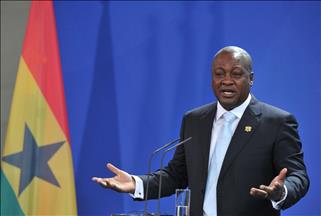
The IMF delegation to Ghana, led by Joel Toujas-Bernate, met with President John Mahama; Vice President Kwesi Amissah-Arthur; National Development Planning Commission Chairman Kwesi Botchwey; Finance Minister Seth Terkper; and Bank of Ghana Governor Kofi Wampah.
Delegation members also met with private-sector officials, members of the donor community, and civil society representatives.
According to the IMF, discussions on a possible economic program for Ghana will continue in Washington next month during the fund's annual meeting.
www.aa.com.tr/en