By Burcu Arik
ISTANBUL
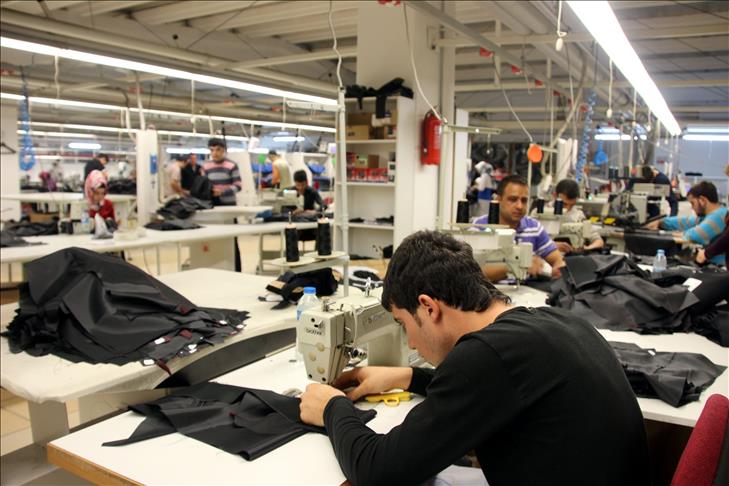
"Not enough", "Insufficient," are just some of the terms used by certain Turkish workers with regards to the latest announcement of a minimum wage hike.
The net minimum wage has been increased to 949 Turkish liras ($410) per month for workers over the age of 16 for the first six months of 2015. In the second half of the year, it will rise to 1,000 liras ($432).
But, although the Turkish minimum wage enters four-digit territory for the first time in the country’s history, certain workers consider it insufficient to meet necessary expenses.
"The latest hike is not enough for the worker and his/her family to maintain their lives, even not enough for their basic needs and services," says Duygu Baskilic, a 27-year-old cashier working in a shopping mall in Istanbul.
A minimum wage worker, Duygu is married and has two sons. She lives in a rented house in Cekmekoy, in the Asian suburbs of Istanbul.
"My husband works in a private company as a security guard. He is paid more than me but our total income remains below the subsistence level," she says.
According to a 2015 report released by Kamu-Sen, a Turkish labor union, the minimum subsistence level for a four-person family is considered to be at 4,105 Turkish liras ($1,785).
The report, which is based on the figures of Turkish Statistical Institute (TURKSTAT), also shows that the poverty threshold for a single person stands at roughly 2,000 liras (approx. $869).
The average total cost of only food and shelter for a four-person family is 1,500 liras ($652), it states, which is still above the increased net minimum wage.
"Let's calculate,” says Duygu. “Our total income is 3,000 liras ($1,304). Rent and bill expenses cost more than one third of our total income. Although we try to keep spending for food and clothes to a minimum, it exceeds 700 liras ($305) per month."
"I have a toddler and I am working which means I have to send him to a preschool, and my older son started elementary school last year. Both cost me at least 600 liras ($256) per month."
In Turkey, the cost of housing and childcare for families with children exceeds all other expenses, according to a 2014 research by DISK-AR, a labor organization.
"Then we have only about 500 liras ($213) to spend in the month. There are also healthcare, transportation, and other basic necessities. Fill in the blanks...I cannot even talk about dining out, weekend activities or savings."
"For a third world country, this (minimum) wage can be acceptable but for a country that is the 16th largest economy of the world, it is inadequate," says Duygu.
However, according to certain economy experts, the minimum wage is high in comparison to the average wage. Furthermore, it leads to obtaining certain rights and social insurance.
"The minimum wage in the Turkish domestic labor market is high in comparison with the average wage. The minimum wage is also high when we compare it with international average wages," says Gokce Uysal Kolasin, vice director and researcher at the Bahcesehir University Center for Economic and Social Research.
According to the European Commission statistics office Eurostat, the minimum wage in Turkey is indeed higher than, for example, in Bosnia and Herzegovina, Albania, Bulgaria, Macedonia, Montenegro, Romania and Serbia.
Kolasin believes that unregistered workers should be the focus of policy, rather than the minimum wage.
"There are millions of unregistered workers in Turkey who are working without any legal rights and are really eager to work for the minimum wage."
Murat Eser, 31, earns the minimum wage. He is not satisfied with the recent hike but not hopeless. According to him, certain adjustments can save the workers' economic problems.
Working in a pizza restaurant as a delivery boy, Murat says: "The latest hike will not make any difference because the taxes are increasing in direct proportion to salaries."
"I had been saving money for eight years and last year, I bought a car finally. But now, I have to think about increasing taxes and oil prices. I think the best solution for the minimum wage workers is to be exempt from paying taxes."
According to an announcement in Turkey’s Official Gazette, motor vehicle taxes for certain passenger cars, for instance, will increase from 859 liras ($366) to 946 Turkish lira ($408).
Murat also believes that, in metropolitan areas such as Istanbul, the living wage is higher than the national median.
"The government could adjust the salaries for the people living and working in larger cities by taking it into consideration," he says.
According to Kolasin, such an adjustment would have a positive effect. "Actually, the government can adjust the minimum wage according to the regions or provinces, because the prices and the cost of living are changing from city to city."
However, she points out, the pushback for such a measure would come from… labor unions.