By Michael Hernandez
WASHINGTON
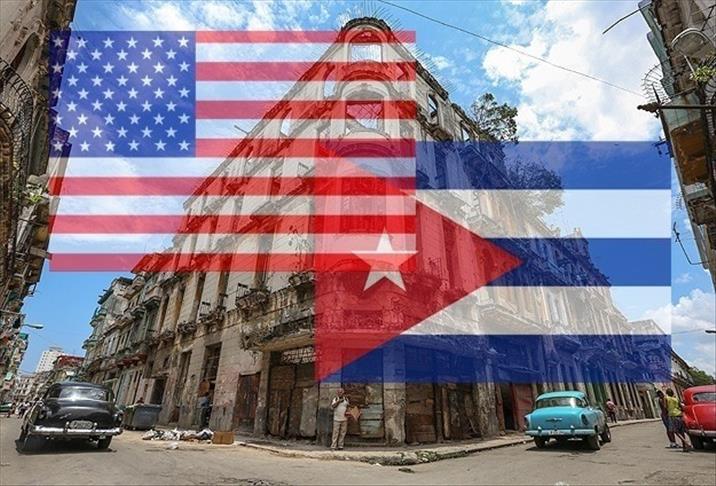
The Obama administration said Thursday that it will significantly weaken the more than 50-year embargo on Cuba beginning Friday, when it loosens travel and trade restrictions.
The new Treasury and Commerce Department rules will help facilitate American travel and investment on the island nation by eliminating daily spending caps, and allowing the previously restricted use of American debit and credit cards.
American companies will be able to export telecommunications equipment to Cuba, that holds a tight rein on the flow of information. That includes the export and re-export of computers, mobile phones, televisions, memory and recording devices and consumer software.
Investments in some small business will also be permitted.
“These changes will immediately enable the American people to provide more resources to empower the Cuban population to become less dependent upon the state-driven economy, and help facilitate our growing relationship with the Cuban people,” White House press secretary Josh Earnest said in a statement.
The move follows President Barack Obama’s announcement in December that the U.S. would begin to normalize relations with the communist nation, and Cuba's announcement Monday that it had released 53 political prisoners that it promised to free.
Still, the full embargo can be lifted only by an act of Congress. Some lawmakers, especially the Cuban-American lawmakers, have voiced strong opposition to Obama’s plan.
“This is a windfall for the Castro regime that will be used to fund its repression against Cubans, as well as its activities against U.S. national interests in Latin America and beyond,” said Sen. Marco Rubio who challenged Obama’s authority to take the actions.
The U.S. embargo on Cuba has been in place since 1960, shortly before diplomatic relations between the nations were severed in 1961.
“Today’s announcement takes us one step closer to replacing out of date policies that were not working and puts in place a policy that helps promote political and economic freedom for the Cuban people,” Treasury Secretary Jack Lew said in a statement.
Americans will now be able to go to Cuba on family, government, journalism, research, professional, sports, and religious travel without a special license.
U.S. travelers will also be allowed to bring back $400 of goods from Cuba, including up to $100 in tobacco and alcohol. That includes highly vaunted Cuban cigars and rum.
Remittances to the country will be increased fourfold from $2,000 per year to $8,000. Sending money to the island nation to bolster private business development and humanitarian projects will be generally authorized without limitation.