Şeyma Erkul Dayanç
23 July 2026•Update: 23 July 2026
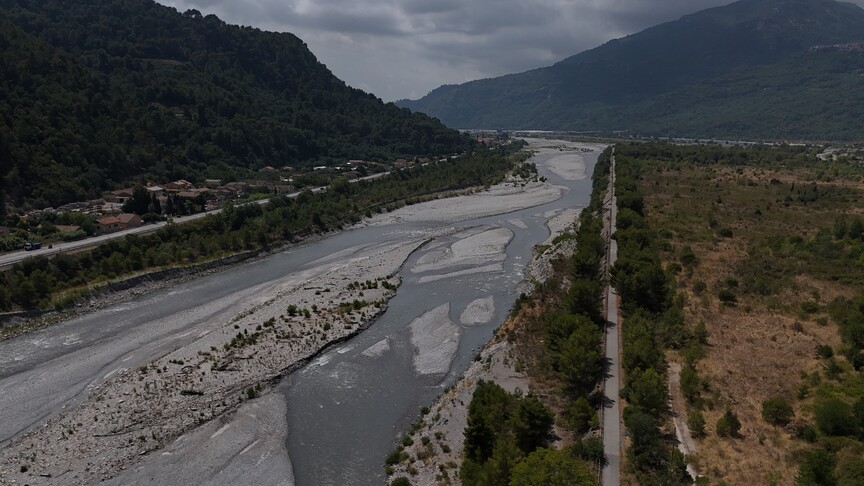
Human-caused climate change intensified Europe's 2026 drought by increasing heat-driven evaporation that dried out soils and depleted water resources, according to a scientific analysis released Thursday by the World Weather Attribution (WWA) group.
The study found that while rainfall deficits contributed to drought conditions across Europe, exceptionally high temperatures played a major role by increasing the atmosphere's demand for moisture, accelerating evaporation from rivers, lakes, soils, and vegetation.
Researchers said climate change has shifted drought patterns in Europe, with rising temperatures increasingly becoming a key driver of agricultural and ecological drought.
"We now see an enhanced tendency for unusual soil drying already in spring, before summer has even begun," said Dominik Schumacher, a scientist at ETH Zurich and one of the study's authors.
"That is our own doing: as temperatures climb, the atmosphere's thirst increases quickly, sucking moisture out of rivers, lakes, reservoirs and the soil. If you have increasingly hot air, it will suck the soils dry," he said.
The analysis found that in western Europe, April-June soil moisture deficits similar to those recorded this year have become about five times more likely because of climate change, while the highly evaporative atmospheric conditions that intensified the drought have become about 80 times more likely.
In eastern Europe, January-June soil moisture deficits have become about 11 times more likely, while exceptionally high evaporative conditions are estimated to be around 40 times more likely than in a climate without human-induced warming.
The researchers said climate change has also increased the severity of drought conditions by raising potential evapotranspiration, meaning rainfall deficits that previously would not have caused severe drought now result in much drier soils.
The study said the drought has already had widespread consequences across Europe, including severe pressure on agriculture, water supplies, river transport, and energy production.
France is expected to record its worst maize harvest in 50 years, while more than 1 million hectares of maize have been lost in Romania, according to the report.
The researchers also pointed to intensifying wildfire conditions across western Europe, particularly in Spain and France.
More than 10,000 people were evacuated overnight from the tourist area of Cap-Ferret in France's Gironde department after a wildfire burned over 2,000 hectares, according to local authorities.
Schumacher said the combination of a relatively wet start to the year followed by extreme heat had created favorable conditions for large wildfires.
"Conditions starting off fairly wet and then transitioning to very, very dry are the prime ingredients for an extreme fire season, because more vegetation can grow and then burn later on," he said.
Mariam Zachariah, a researcher at Imperial College London and a member of the WWA study team, warned that the current drought conditions could become even more frequent if global temperatures continue to rise.
"What's most alarming is that these conditions are occurring at 1.4C of warming," she said.
"If global emissions push temperatures up to 2.8C as predicted, these intense evaporative conditions could double in likelihood. Without rapid, aggressive emissions cuts, Europe is heading for a future where these scorching, dry summers happen time and time again," Zachariah added.