Elena Teslova and Yasin Gungor
19 October 2026•Update: 19 October 2026
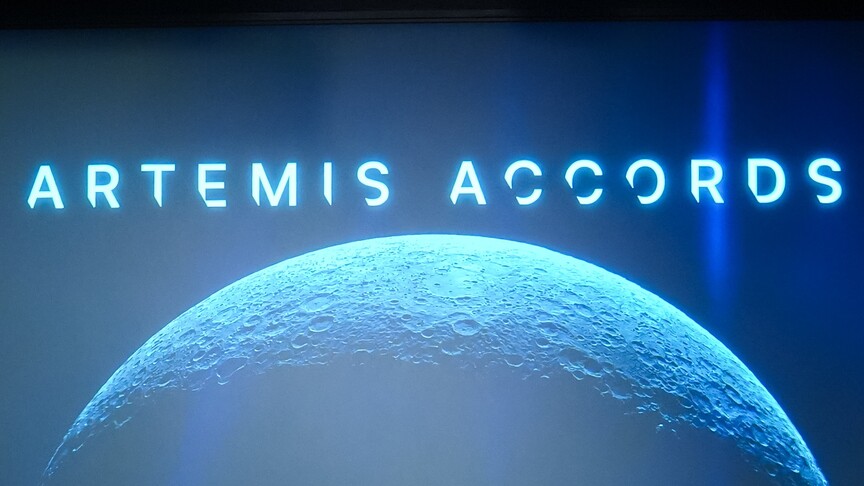
Uzbekistan and the US signed Monday the Artemis Accords on peaceful space exploration and launched a strategic dialogue mechanism, Uzbek Foreign Minister Bakhtiyor Saidov said.
In a statement on Telegram, Saidov said he had held the inaugural meeting of the new dialogue mechanism with US Secretary of State Marco Rubio in the city of Samarkand, describing its launch as an important step toward the consistent development of bilateral relations.
"The talks focused on implementing agreements reached by the two countries' leaders, expanding trade and investment, and developing cooperation in energy, critical minerals and advanced technologies," he said.
Following the talks, Saidov and Rubio signed the accords, which establish principles for international cooperation in the peaceful exploration and use of the Moon, Mars, comets and asteroids.
Uzbekistan became the 77th country to sign the accords, Saidov said.
The agreement would create opportunities to expand cooperation with NASA and other participating countries' space agencies, train Uzbek specialists and facilitate the transfer of space technologies, he added.
The US State Department congratulated Uzbekistan on joining the space accords, noting that the two sides discussed ways to "deepen the enhanced strategic partnership" ahead of the upcoming G20 Summit in the US state of Florida in December, to which Tashkent is invited.
During the exchange, Rubio welcomed Tashkent's interest in US civil nuclear technology and examined avenues to open commercial opportunities for American enterprises within Uzbekistan's space industry.
C5+1 meeting
Rubio and Saidov also pledged to utilize the momentum of the C5+1 platform to strengthen economic prosperity and security across Central Asia.
Separately, Uzbekistan hosted a ministerial meeting in the C5+1 format, bringing together the US and the five Central Asian countries -- Uzbekistan, Kazakhstan, Kyrgyzstan, Tajikistan, and Turkmenistan.
The meeting focused on expanding trade and economic cooperation, attracting long-term investment and developing transport, energy and digital infrastructure, Saidov said.
Particular attention was paid to critical minerals, with cooperation in the sector expected to support the development of industrial capacity, create jobs and open up technological opportunities across the region.
Saidov also proposed establishing regular cooperation between the C5+1 format and the B5+1 business platform to involve business representatives in identifying priority projects and advancing their implementation.
Uzbekistan is ready to continue practical cooperation in these areas during its co-chairmanship of the C5+1 Secretariat, he said.