Seyma Erkul Dayanc
23 September 2026•Update: 23 September 2026
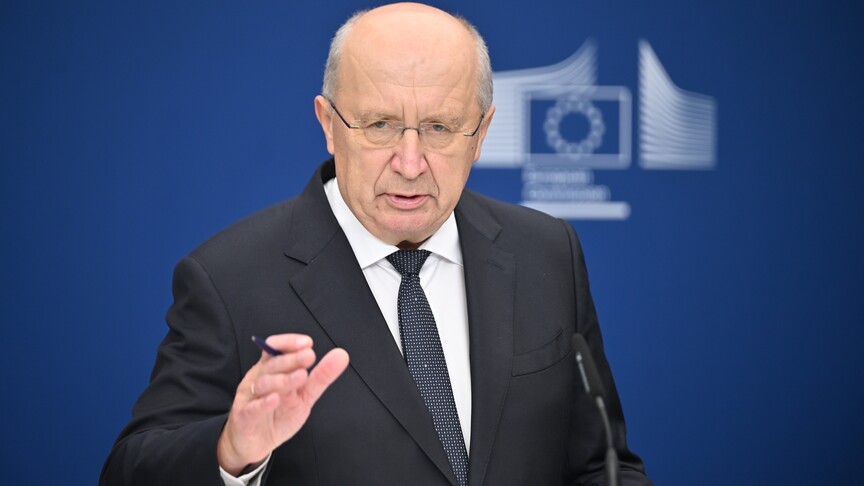
The EU faces a growing gap between demand for satellite launches and available launch capacity, Commissioner for Defense and Space Andrius Kubilius said Wednesday.
“Today, we're at a tipping point. We overcame the launcher crisis, but now we face the next maybe even bigger challenge,” Kubilius said at the 2nd EU Access to Space Conference in Brussels.
About 50,000 satellites are expected to be launched worldwide over the next decade, while global launch capacity is lagging behind demand, he said.
“The result, fierce competition for limited launch opportunities, huge increase in prices, putting national and European space ambitions at risk,” Kubilius said.
The EU will need 62 launches by 2034 for programs including Galileo, Copernicus and IRIS², he said, adding that European launch demand is expected to increase nearly sixfold.
“Ariane (launch vehicle) is set to launch 10 times a year, but we will need 14 launches in 2031 alone,” Kubilius said. “Vega will launch six times a year, but we will need eight Vega launches in 2030 alone.”
The challenge also involves ground infrastructure, including launch sites and testing facilities, he said.
“So we must fill this gap,” Kubilius said.
“Autonomous access to space is the most important objective. We must not be dependent on foreign rockets,” he added.
Kubilius said Europe also needed greater investment and closer cooperation among the European Commission, European Space Agency and member states.
He said he would visit launch sites, manufacturing facilities, and test centers across Europe to assess bottlenecks and solutions, and would present an action plan on European access to space next year.
“And I want everybody to understand that launching is our most important strategic priority,” Kubilius said.