A worsening drought is gripping large parts of Europe after months of below-average rainfall and repeated heat waves depleted soils, lowered reservoir levels and pushed some of the continent’s major rivers to critically low levels.
The effects are spreading beyond the environment, with water restrictions affecting daily life, low river levels disrupting major transport routes and industrial supply chains, and growing pressure on agriculture and electricity production.
Here is how the drought is unfolding across Europe, what is driving it and what could happen next:
Drought conditions are affecting large parts of Europe, with some of the most severe stress currently concentrated across central and western Europe, southern Britain, northern Italy and parts of eastern Europe.
The European Drought Observatory said in its latest assessment that drought conditions remained critical across much of the continent and had worsened particularly in central-western Europe.
“Alert” conditions persisted in parts of Ukraine, Belarus and Poland, while they also worsened across a broad central European belt stretching from France and southern Germany through Switzerland, Austria, Czechia and Slovakia to Hungary, Romania and Serbia.
Alert conditions also emerged in the northeastern Iberian Peninsula and intensified in southern Britain and northern Italy.
Meanwhile, “warning” conditions expanded across France, the UK, the Balkans and central Europe, with new affected areas also emerging in Scandinavia.
The current drought follows an exceptionally dry spring. The Copernicus Climate Change Service said Austria recorded its driest spring since records began in 1857, while Czechia experienced its driest since 1961.
England is also facing severe water stress, with half of the country declared in drought by early August and reservoir levels well below their long-term average.
The decline in Europe’s major rivers is largely the result of prolonged rainfall deficits compounded by repeated heat waves, which have dried soils and increased evaporation across much of the continent.
Copernicus said June was drier than average across much of western, central and eastern Europe, with persistent high-pressure systems suppressing rainfall.
Exceptional temperatures further depleted soil moisture, leaving less water available to feed rivers. As a result, below-average river flows were recorded across large parts of France, Germany, Switzerland, Austria, Czechia, Slovakia, Hungary and Poland.
River flows were already below average during spring across much of central and eastern Europe, including the Rhine and Danube basins, reflecting persistent seasonal rainfall deficits.
The combination means that even periods of rainfall may provide only temporary relief. After months of dryness, some incoming water is first absorbed by depleted soils and groundwater systems before it can significantly restore river flows.
Municipalities across Europe are enforcing increasingly strict water restrictions to protect depleted reservoirs.
In heavily affected countries such as France and England, authorities have restricted nonessential water use, including watering gardens, washing vehicles and filling private swimming pools.
To enforce the measures, authorities have introduced administrative fines, with penalties reaching up to €3,000 ($3,465) for individuals and businesses violating emergency bans.
Cities are also working to upgrade aging water infrastructure to reduce losses in distribution systems.
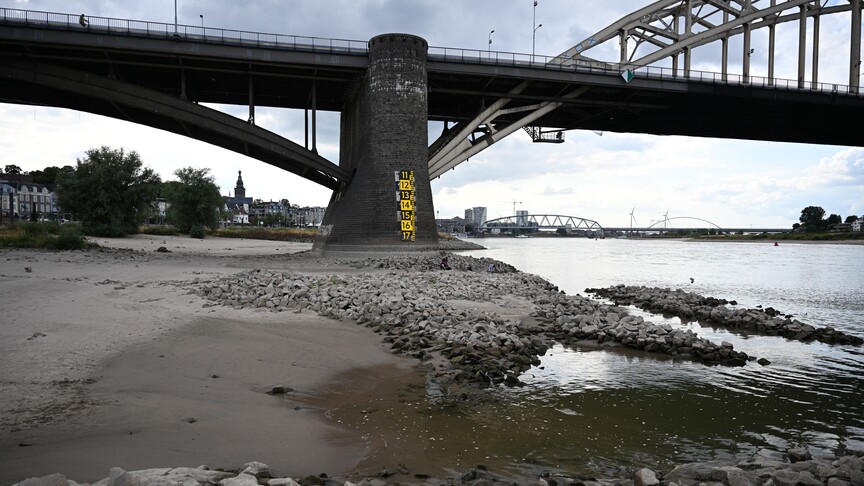
Record-low water levels in the Rhine and Danube have disrupted logistics chains, forcing some cargo vessels to operate at just 20-30% of capacity and prompting logistics companies to divert commercial freight to rail networks.
The disruption is affecting supplies of raw materials vital to industry, including coal, chemicals and grain.
Drought and heat have also strained irrigation supplies and crops across parts of Europe, prompting the EU to cut its 2026 yield forecasts for grain maize by 7% and sunflower by 6%.
Low river levels are also curbing electricity generation across Europe.
Serbia’s Djerdap 1 hydropower plant has fallen to 20% of capacity, while Hungary’s Paks nuclear plant and reactors in Romania and France have also faced shutdowns or output cuts because of insufficient cooling water or rising river temperatures.
Triodos Bank estimates that extreme heat and prolonged drought could cut EU GDP by about 1% in 2026, wiping out the bloc’s previously projected economic growth and causing roughly €180 billion in losses.
A lack of sustained and sufficient rainfall in the coming weeks could not only prolong Europe’s current drought but also carry water-supply pressures into the autumn and winter months.
Further declines in river flows and reservoir levels could lead to wider water-use restrictions, tighter limits on agricultural irrigation and further disruptions to river transport and energy production.
Copernicus seasonal forecasts point to a higher likelihood of wetter-than-average conditions in southern Europe in early autumn and central Europe later in the season.
However, temperatures are expected to remain well above average across virtually the entire continent, meaning rainfall would need to be sustained to reverse accumulated water deficits.
news_share_descriptionsubscription_contact