Melike Pala
22 May 2026•Update: 22 May 2026
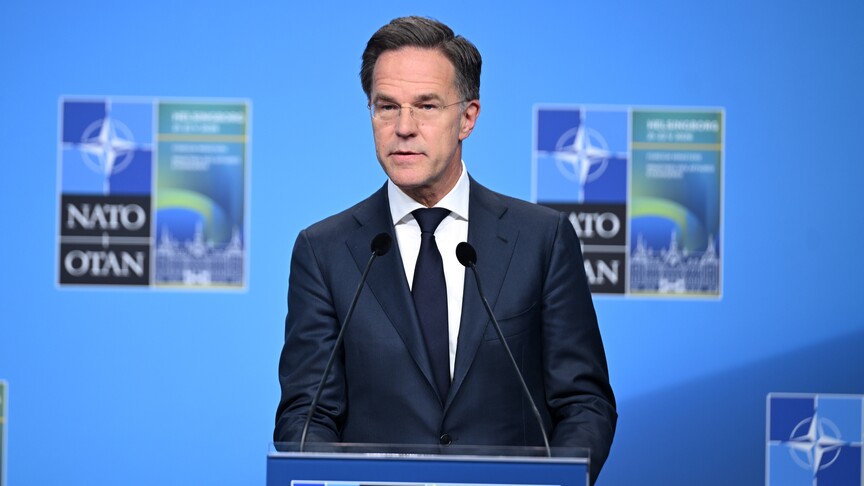
Europe is expected to take greater responsibility for its own defense as the United States gradually shifts more strategic focus toward the Middle East and the Indo-Pacific, NATO Secretary-General Mark Rutte said Friday.
Speaking after a meeting of foreign ministers in Helsingborg, Sweden, Rutte said NATO is moving toward a more “structured and step-by-step” adjustment in which European allies and Canada increase their share of defense commitments while Washington maintains its central role in the alliance’s deterrence structure.
“Over time, what you will see is in a structured way, step by step, the US pivoting more towards these other areas in the world,” he said, stressing that the shift does not weaken transatlantic ties.
Rutte said European allies are expected to continue raising defense spending and strengthening military capabilities to assume more responsibility within NATO’s European security framework.
At the same time, he said the US is expected to remain engaged in Europe through both conventional and nuclear deterrence.
“The overall deterrence and defense in Europe has to stay the same,” Rutte said.
He reiterated NATO’s commitment to collective defense under Article 5, describing the alliance as a defensive organization focused on deterrence and readiness.
“Allies' commitment to Article Five is iron clad. Our resolve and ability to defend every ally is absolute. Would anyone be foolish as to attack us, the response would be devastating,” he said.
Rutte also confirmed that Ukrainian President Volodymyr Zelensky has been invited to attend the upcoming NATO summit in Türkiye’s capital Ankara.
He praised Türkiye’s defense industry, highlighting its growing role within the alliance.
“Türkiye, with over 3000 companies, is extremely important, and also a great example of how to organize a defense industrial base,” he said.
Turning to tensions in the Middle East, Rutte said countries are coordinating efforts to safeguard freedom of navigation in the Strait of Hormuz, including through the deployment of maritime assets such as mine-hunting capabilities.
“It is important that countries are coming together around plans to ensure that the straits can be open for transit,” he said.
“This is an ongoing discussion within that coalition, where NATO listens in, but, of course, it's not leading,” Rutte added.