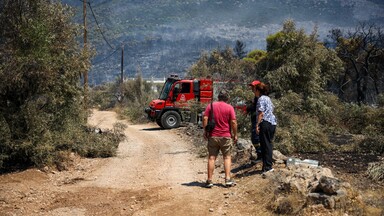
Europe’s worsening drought is disrupting transport, agriculture and energy production, as critically low river levels restrict freight traffic and prolonged heat depletes soil moisture across large parts of the continent.
Recent research by the European Commission’s Joint Research Centre (JRC) said drought conditions remained “stable and critical” across most of Europe in July and had deteriorated in central-western areas, including France, southern Germany, Hungary, Austria, the Czech Republic and Slovakia.
From the Rhine and Loire to the Po, Danube and Tisza, prolonged rainfall deficits and successive heat waves have pushed river levels to critical lows, disrupting fuel deliveries, industrial transport, irrigation and electricity generation.
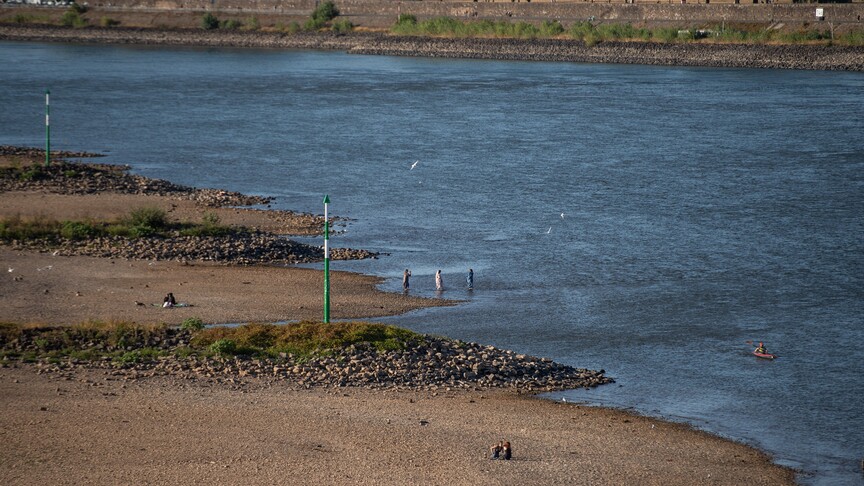
In Germany, low water levels on the Rhine are severely restricting freight traffic along the country’s main industrial waterway.
The Rhine, Europe’s busiest inland waterway, carries around 80% of Germany’s inland waterway freight, according to the Federal Waterways and Shipping Administration.
Near Kaub in Rhineland-Palatinate, however, most vessels can no longer pass with their normal loads, effectively dividing the river into northern and southern sections for freight operators.
The disruption has also affected eastern France, where vessels are unable to reach the Port of Strasbourg with their usual cargo.
Oil tankers are carrying around 350 tons of fuel, compared with more than 1,500 tons under normal conditions, Jean-Laurent Kistler, development director at the French Waterways Authority in Strasbourg, told French daily Le Figaro.
As of Friday, 14% of filling stations in France’s Grand Est region had run out of at least one type of fuel, compared with 3% nationwide. In parts of Haut-Rhin and the neighboring Territoire de Belfort, between 25% and 50% of stations were affected.
Elsewhere in France, authorities in the Loire department issued an eighth drought decree after recent rainfall failed to significantly improve conditions. Some areas entered the highest “crisis” category, under which water use is limited to essential health and safety needs.
Northern Italy’s Po basin, meanwhile, has been placed under “high” water severity, the most serious classification.
Almost all monitoring stations have recorded severe drought, while conditions at Cremona and Borgoforte have been classified as extreme. Satellite images show wider exposed riverbeds, larger sandbanks and considerably drier surrounding farmland than a year ago, according to Italian media.
In Lomellina, one of Italy’s main rice-producing regions, irrigation water is being distributed in shifts, with potential agricultural losses estimated at more than €100 million.
Reduced freshwater flow at the Po Delta has also allowed saltwater from the Adriatic Sea to move upstream, threatening to make river water unsuitable for irrigation.
The Danube, the EU’s longest river and a crucial source of transport, irrigation, energy and drinking water for the 10 countries it crosses, is also experiencing severe hydrological drought.
In Budapest, the river fell to a record low of 14-19 centimeters (5.5-7.5 inches) on Aug. 4, exposing large sections of the riverbed, shipwrecks and the so-called “Rock of Starvation,” historically seen as a warning of crop failure and hunger, according to the report by The Guardian.
Near Szentendre, some stretches became shallow enough to cross on foot, while between 4,000 and 5,000 households temporarily lost access to drinking water.
The decline has also threatened Hungary’s Paks nuclear power plant, which relies on the Danube for cooling and supplies around half of the country’s electricity.
Authorities began sinking two 80-meter (262-foot) barges to raise water levels near the plant amid warnings that a further decline could force additional cuts to electricity generation.
In Romania, the Danube’s discharge at Bazias, where it enters the country, fell to 1,400 cubic meters per second in August and could drop further to 1,300. That is around one-third of the long-term August average of 3,900 cubic meters per second.
The drought is a compound crisis caused by two mutually reinforcing factors: prolonged rainfall shortages and extreme heat that accelerates the loss of water from soils, rivers and vegetation, according to a World Weather Attribution scientific report.
Persistent high-pressure systems over northern and central Europe during winter and early spring prevented Atlantic weather systems from bringing sufficient rainfall to Germany, Poland, the Czech Republic, Slovakia and the Baltic region.
From April, the high-pressure pattern expanded westward, blocking rain-bearing systems from reaching the Iberian Peninsula, France and northern Italy.
The situation intensified in June as hot air moved northward from southern Europe, bringing prolonged clear skies and record-breaking temperatures.
The heat increased evapotranspiration -- the loss of moisture from soil and vegetation into the atmosphere. Already-dry soils then absorbed more heat, accelerating further warming and water loss.
As a result, the initial meteorological drought caused by low rainfall developed into agricultural drought as soils dried, and then into hydrological drought as rivers, lakes and groundwater levels declined.
Scientists found that soil-moisture deficits such as those recorded in 2026 are now around five times more likely in western Europe and 11 times more likely in eastern Europe than in a climate 1.4C (2.5F) cooler.
Agriculture is among the sectors facing the most immediate losses.
The JRC reduced its winter crop yield forecasts by around 1%-4% from the previous month, while projections for grain maize and sunflower were cut by 6%-7%.
France is facing its lowest maize harvest in decades, while more than 1 million hectares (2.47 million acres) of maize cultivation have reportedly been lost in Romania.
Central-western France, southern Czech Republic, western Slovakia, Hungary and western Romania are among the main agricultural hotspots. Lower harvest expectations have also been reported in Germany, Spain and Italy.
Low river levels are simultaneously raising transport costs and threatening power generation.
Nuclear and thermal power stations require river water for cooling, while hydropower production depends on adequate river and reservoir levels.
In France, three nuclear reactors were shut down during the late-June heat wave because river water was too warm or flows were too low, while eight others operated at reduced capacity, according to the JRC.
Triodos Bank estimates that drought and extreme heat could reduce EU economic output by around 1% in 2026, equivalent to approximately €180 billion.
The projected loss would erase much of the European Commission’s anticipated 1.1% economic growth for the year, with heat-related declines in labor productivity alone estimated at around 0.6% of EU gross domestic product.
news_share_descriptionsubscription_contact