Seyma Erkul Dayanc
09 May 2026•Update: 09 May 2026
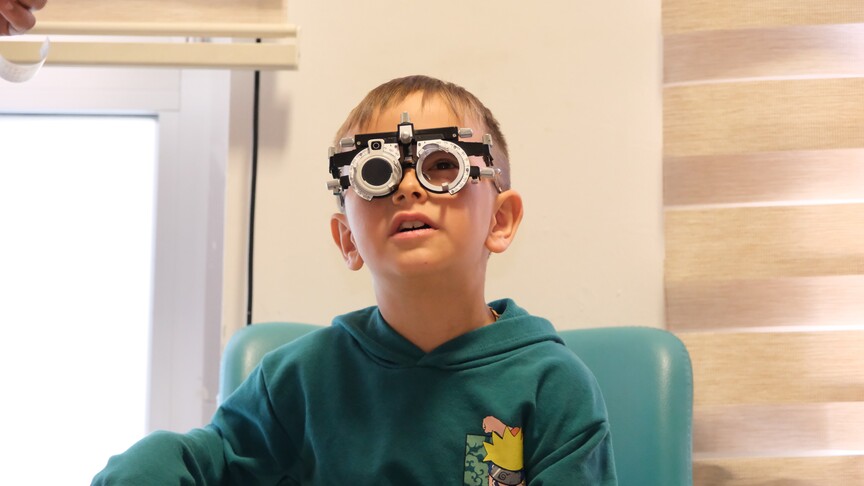
French researchers are developing “digital twins” of the human eye to help combat a global myopia epidemic that could affect nearly 5 billion people by 2050, broadcaster BFM reported Friday.
The project seeks to better tailor treatment for patients by identifying the most suitable vision-correction lenses for each individual, particularly children at risk of developing severe myopia.
Nearly 30% of France’s population is already affected by myopia, a figure expected to rise sharply in the coming decades.
According to the World Health Organization, around 5 billion people could be myopic by 2050, including nearly 1 billion with severe forms.
Myopia can continue progressing into adulthood and lead to serious complications such as retinal detachment, glaucoma and early cataracts, according to medical data.
The project, part of a research initiative called Premyom, focuses on building digital models of the eye using clinical, lifestyle and genetic data to simulate how myopia evolves over time.
These “digital twins” would allow doctors to predict disease progression and assess different treatment options before prescribing corrective lenses.
Researchers also aim to integrate real-world data from connected glasses measuring screen time, outdoor exposure and wearing habits to refine the models and improve predictions.
The consortium said additional numerical models are being developed to simulate how environmental factors, such as reduced outdoor activity during childhood, influence the progression of myopia.
A clinical cohort study called “Premyom 1000,” launched in 2025, is already following 300 children fitted with myopia-control solutions, with a target of 1,000 participants monitored over five years.