Necva Tastan Sevinc
21 May 2026•Update: 21 May 2026
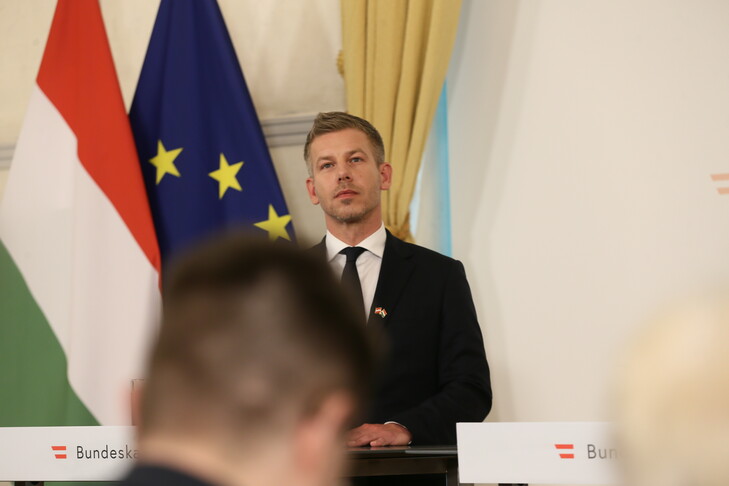
Hungarian Prime Minister Peter Magyar said Thursday that Hungary intends to play a “constructive role in the European Union” while defending national interests during talks with Austrian Chancellor Christian Stocker in Vienna.
"The time has come for Austria and Hungary to embark on a new chapter in their relations, focusing on closer cooperation rather than previous disputes," Magyar was quoted as saying at a joint press conference by the Hungarian daily Magyar Nemzet.
“The Hungarian government intends to play a constructive role in the European Union, while consistently representing Hungarian interests,” he said.
Magyar announced that Austria and Hungary will hold “a joint government meeting later this year,” which he said could take place in Godollo in September.
He said his government’s priorities are “combating corruption, obtaining EU funds, restarting the Hungarian economy, and stabilizing public finances.”
The Hungarian premier also confirmed that Budapest wants to revive the Visegrad Group (V4), saying Hungary plans to host a summit with the leaders of Poland, the Czech Republic, and Slovakia by the end of June.
Magyar added that broader regional cooperation could eventually include Austria, Croatia, Slovenia, Romania, and Western Balkan countries.
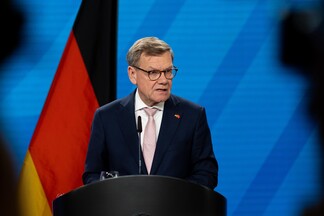
Stocker highlighted the importance of Austrian-Hungarian economic relations, noting that around 1,400 Austrian companies operate in Hungary and employ some 70,000 people.
The Austrian chancellor stressed the importance of “legal certainty and a predictable economic environment” for businesses, while acknowledging ongoing disputes over Hungary’s special taxes on foreign companies.
Stocker also expressed support for EU enlargement, “especially in the case of the Western Balkan countries.”
“Enlargement is one of the most important geopolitical tools for peace, security, and stability in Europe,” he said.
Migration, energy, security, and transport infrastructure were also discussed during the talks.
Magyar said Hungary would like “to ease or eliminate the recurring border controls,” arguing that Budapest continues to guarantee the protection of the European Union’s external borders.
On energy, both leaders emphasized diversification and stronger regional cooperation.
Magyar pledged support for “the development of cross-border energy capacities and pipeline systems, as well as the further diversification of energy sources,” saying the issue directly affects Europe’s competitiveness.