- EU failed to learn lessons from energy crises triggered by Russia-Ukraine war, she says, urging stronger green transition
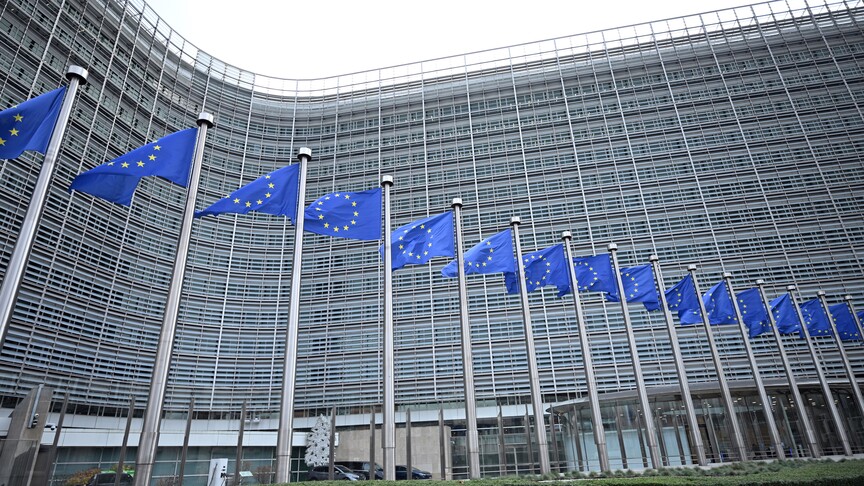
The European Union remains trapped in a cycle of fossil fuel dependency, making uneven progress on its green transition, European Green Party co-chair Vula Tsetsi said.
In an exclusive interview with Anadolu, Tsetsi said the EU takes “a few steps forward and a few steps backward.”
“We need stability in order to bring forward a project and also in order to support it."
With the Strait of Hormuz closed and energy prices rising sharply, Europe is confronting its second major energy crisis in less than five years.
As of early May 2026, Brent crude prices have climbed above $100 per barrel, creating what analysts have described as a "third oil shock" for Europe.
The surge in prices has sharply increased energy and electricity costs for European industries and households alike, intensifying pressure on businesses already struggling with weak economic growth and recession fears.
Higher fuel prices are also feeding inflation across the bloc, raising the costs of transportation, agriculture and manufactured goods while deepening concerns over energy poverty.
Tsetsi said the current crisis demonstrates that Europe has not fundamentally changed course since the war in Ukraine began.
"The war in Ukraine shows us exactly the same dependency we had with an autocrat like (Russian President Vladimir) Putin, and we have not learned our lessons," she said.
"Certainly the war in the Middle East and the whole situation around the fossil fuels energy ... has shown ... that we are in the middle of economic crisis."
'Business as usual will lead nowhere'
According to Tsetsi, Europe should have accelerated investment in renewable energy years ago in order to reduce exposure to volatile global fossil fuel markets and geopolitical actors.
"If we continue business as usual, we will go nowhere … We really need to change that," she said.
Tsetsi argued that the EU's current predicament reflects not only economic failures but also political choices.
"The energy choices are political choices, are economical choices, are ecological choices, and last but not least, are social choices," she said.
The Greek politician pointed to the long-standing issue of energy poverty in Greece as an example of how vulnerable European societies remain to high energy costs.
"The energy bills have always been extremely high compared to the income... My country could have been completely independent through the years if we were able to invest in renewables and become independent, and that has not been the case," she said.
Green Deal taking 'steps forward and steps back'
As energy prices continue to climb across Europe, the European Commission has acknowledged that high energy costs are increasing the risk of energy poverty and has introduced measures aimed at lowering bills and protecting vulnerable consumers.
Tsetsi, however, argued that Europe needs structural long-term solutions rather than temporary emergency measures.
"I believe that in the times we have now, we do not only need short-term solutions, just à la carte, but we need to promote a real energy transition project," she said.
She also criticized what she described as inconsistency in the implementation of the Green Deal, launched under European Commission President Ursula von der Leyen with the goal of making Europe climate neutral by 2050.
Green Deal agenda rests on four main pillars, carbon pricing, sustainable investment, industrial policy and a just transition, but Tsetsi said the EU has struggled to maintain political consistency on the project.
EU needs reform
On the EU's decision-making mechanism, Tsetsi said Europe needs deeper political integration and institutional reform in order to respond effectively to economic and geopolitical crises.
She said that the EU should abolish unanimity voting in key areas such as defense and taxation to avoid paralysis, particularly as the bloc considers future enlargement.
"We absolutely need to invest in making this Europe stronger and making Europe stronger means we have to abolish unanimity, at least in some areas," Tsetsi said.
The debates within the EU over whether the bloc's decision-making mechanisms are still fit for purpose during times of crisis are growing.
Critics have increasingly argued that unanimity requirements among member states slow down responses on key issues such as sanctions, energy policy, enlargement and defense, often leaving the EU vulnerable to internal political blockages.
"Reforms are needed if we want to enlarge, because enlargement without reforms, it will make Europe even more handicapped. So our priority is to abolish the veto," she added.