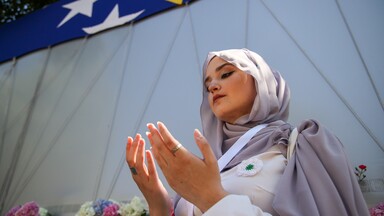
More than three decades after the Srebrenica genocide, international and domestic courts have convicted Bosnian Serb political leaders, military commanders, security officials and direct perpetrators for their roles in Europe’s worst atrocity since World War II.
On July 11, 1995, Bosnian Serb forces under the command of Gen. Ratko Mladic captured Srebrenica, a UN-declared “safe area” in eastern Bosnia and Herzegovina.
In the days that followed, at least 8,372 Bosniak men and boys were executed in forests, warehouses, schools and farms, while women, children and the elderly were forcibly expelled, according to court findings and the Potocari Memorial Center.
Victims were buried in mass graves, many of which were later dug up and moved to secondary graves in an attempt to hide evidence.
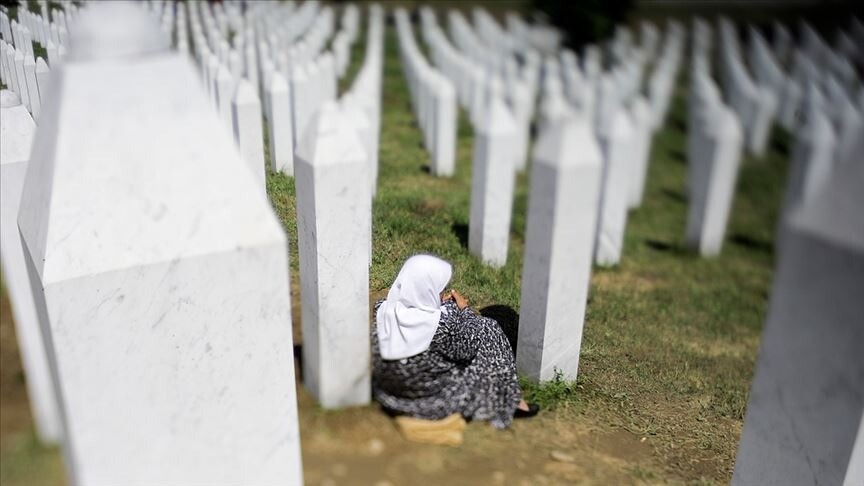
Thousands have since been identified through DNA analysis and buried at the Potocari Memorial Cemetery, while more than 1,000 victims remain missing.
The International Court of Justice recognized the killings in and around Srebrenica as genocide in 2007, relying on evidence from the International Criminal Tribunal for the former Yugoslavia.
According to data compiled by Detektor and Justice Info in 2025, 54 people have been sentenced to a total of 781 years in prison for genocide and other crimes committed in Srebrenica, while several senior figures received life terms.
Mladic, the wartime commander of the Army of Republika Srpska, is one of the central figures held responsible for the genocide.
ICTY judges found that forces under his command carried out the organized separation, detention, execution and burial of Bosniak men and boys after the fall of Srebrenica.
He was convicted in 2017 of genocide, crimes against humanity and violations of the laws or customs of war. His life sentence was upheld in 2021.
Mladic had evaded arrest for 16 years before being captured in Serbia in 2011 and transferred to The Hague. He remains in custody in The Hague, where a UN court rejected a fresh request for early release on humanitarian grounds in May 2026.
- Radovan Karadzic
Karadzic, the wartime political leader of the Bosnian Serbs and former president of Republika Srpska, was convicted of genocide in Srebrenica, as well as crimes against humanity and war crimes committed during the 1992-1995 Bosnian War.
He was initially sentenced in 2016 to 40 years in prison. In 2019, his sentence was increased to life imprisonment.
Karadzic had been indicted in 1995 but spent years in hiding in Serbia under the false identity Dragan David Dabic, presenting himself as a practitioner of alternative medicine. He was arrested on a bus in Belgrade in 2008 and later transferred to The Hague. He is serving his sentence in the UK.
Two former senior security officials of the Bosnian Serb army, Vujadin Popovic and Ljubisa Beara, were also sentenced to life.
Popovic, security chief of the Drina Corps, and Beara, chief of security of the VRS Main Staff, were convicted over their roles in the mass killing in Srebrenica.
The tribunal found them guilty of separating Bosniak men and boys from their families, detaining them, transporting them to execution sites, killing them and burying their bodies.
Beara died in prison in 2017. Popovic remains among the most senior officials convicted for the genocide.
Radislav Krstic, former chief of staff and later commander of the Drina Corps, was the first person convicted by the ICTY in connection with the Srebrenica genocide.
In 2004, he was sentenced on appeal to 35 years in prison for aiding and abetting genocide. Judges found that he knew Bosnian Serb forces intended to kill Bosniak men and boys and that he substantially contributed to the operation.
Krstic is serving his sentence in Estonia. In a November 2024 letter, he became the first convicted Srebrenica genocide perpetrator to formally acknowledge the genocide and express remorse, but his early release requests were rejected.
Other ICTY convictions include Drago Nikolic, Vidoje Blagojevic, Ljubomir Borovcanin, Vinko Pandurevic, Radivoje Miletic and Milan Gvero, who received prison terms for crimes linked to Srebrenica.
Several defendants, including Momir Nikolic, Drazen Erdemovic and Dragan Obrenovic, admitted guilt and testified in related cases.
Erdemovic, a member of the 10th Sabotage Detachment, was among the first to plead guilty, admitting participation in executions at the Branjevo military farm.
The Court of Bosnia and Herzegovina has also convicted numerous defendants for genocide and other crimes in Srebrenica.
Milorad Trbic, a former assistant security chief with the Zvornik Brigade, was sentenced for involvement in the capture, detention, execution and concealment of bodies of Srebrenica victims.
Other domestic convictions include cases against members of military, police and security structures who guarded prisoners, organized transport, took part in executions or helped bury victims.
Franc Kos, a former member of the 10th Sabotage Detachment, received one of the longest domestic sentences, 35 years, for crimes against humanity over killings at Branjevo, where hundreds of Bosniak men were executed.
Courts in Serbia and Croatia have also convicted former members of the Scorpions paramilitary unit and others for crimes against Srebrenica prisoners, including killings near Trnovo. Video footage of those executions later became one of the most notorious pieces of evidence from the genocide.
Former Serbian President Slobodan Milosevic was tried in The Hague on charges including genocide in Bosnia, but died in detention in 2006 before a verdict was reached.
Some suspects are dead, others remain outside the reach of Bosnian courts, and prosecutors face growing difficulties as witnesses age and evidence becomes harder to obtain.
Three decades on, Srebrenica is remembered not only for the genocide itself, but also for the failure to protect civilians in a UN-declared safe area, the long pursuit of justice and the continuing effort to identify victims still missing from mass graves.
The UN General Assembly in 2024 declared July 11 the International Day of Reflection and Commemoration of the 1995 Genocide in Srebrenica, condemning denial of the genocide and the glorification of convicted war criminals.
news_share_descriptionsubscription_contact