



The tea is already brewing when guests arrive. Across Türkiye, the small tulip-shaped glass feels like a timeless symbol of hospitality – something inherited, not invented.
Most people assume it has always been this way. Seyma Tunc, 37, certainly did. She drinks four pots a day and, when asked, placed tea at the heart of Turkish identity going back centuries — "Ottoman times, even," she told Anadolu.
She was wrong — and she knows it now.
"I was shocked," Tunc said, after finding out the drink she “cannot live without” has only been part of Turkish life for roughly 80 years. "Because I'd never been curious enough to look it up.”
Her surprise is perhaps the most honest measure of how thoroughly tea has embedded itself into Turkish life. Because the real story of how it got there is one of war, economic crisis and deliberate state engineering -- not ancient custom.
According to historian Esra Ansel Derinbay, tea played no meaningful role in everyday Ottoman life until surprisingly late.
“It was popularized only in the late 19th century. (Before that) tea was not widely known by the public,” Derinbay, author of The Story of Tea, told Anadolu in an interview.
“It was known among the elite, especially in circles of the ruling class who were in contact with embassies and European envoys and diplomats.”
That began to change in the mid-19th century. During the Crimean War of 1853–1856, a large number of British and French soldiers, along with their families, poured into Istanbul, generating an entirely new consumer demand.
“That started demand for tea in the Ottoman market. The demand really gave rise to the Ottoman tea trade,” Derinbay said.
Before the war, what little tea existed in Ottoman markets arrived via Russian traders, who sourced it from China. After the war, Britain became the dominant supplier.
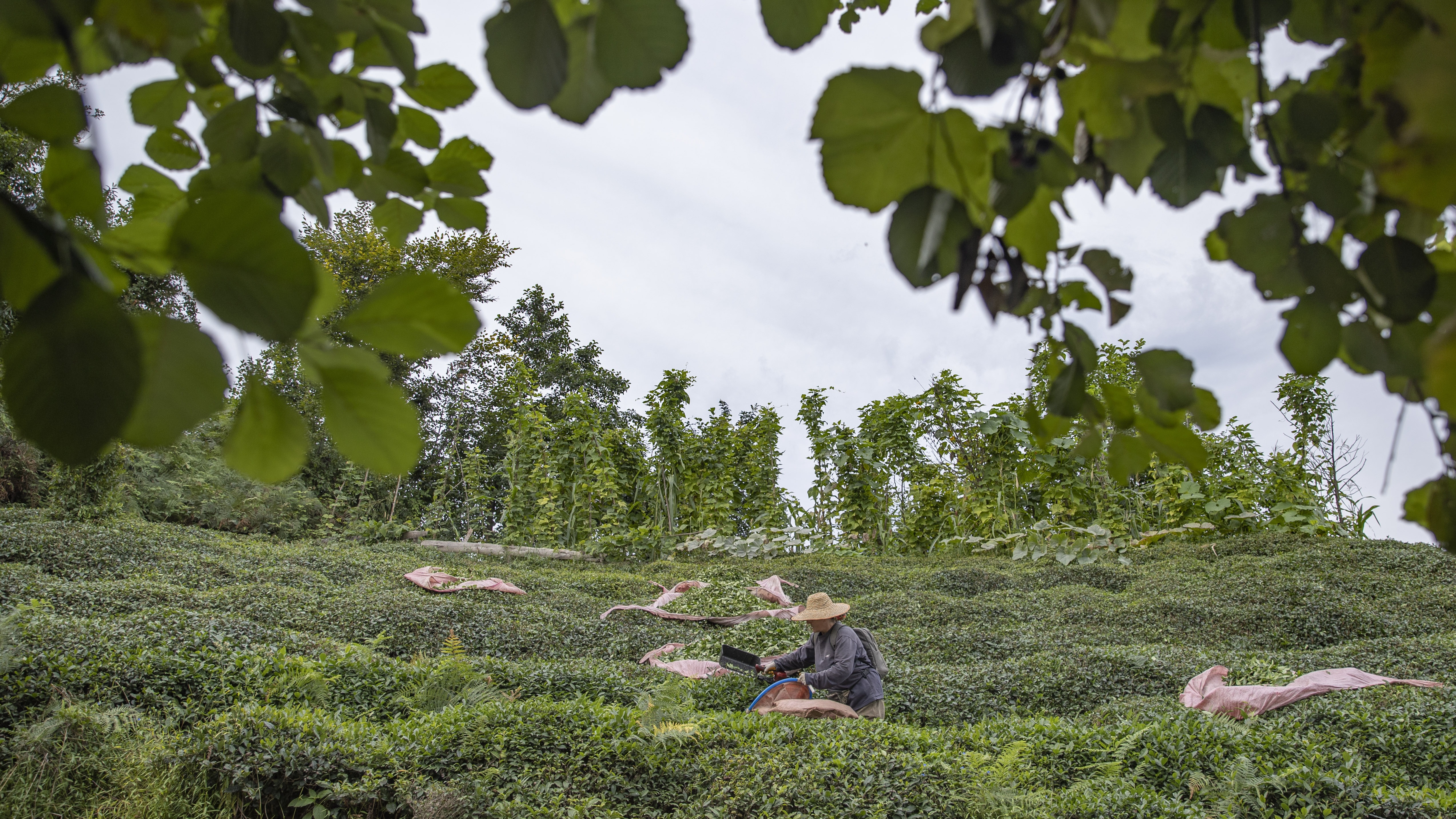
As tea imports increased, Derinbay said the Ottoman government and the palace began to show interest in tea cultivation, especially during the reigns of Sultan Abdulaziz and Abdul Hamid II.
“They started experimenting with tea,” Derinbay said.
“They started to plant those tea seeds and tea saplings which were imported from Japan in the experimental gardens and also in the gardens of the agricultural schools.”
According to Derinbay, these early trials took place in Edirne, Bursa and Adana provinces, but failed for climatic reasons. “They didn't know at that point the Eastern Black Sea region was suited climactically for the cultivation of tea,” she said.
By the end of the Ottoman period, officials had begun to realize the similarity between the Eastern Black Sea region and Georgia’s Batum, where tea cultivation had already been established under Russia. But those plans were interrupted by World War I.
Tea’s real breakthrough came with the founding of the Republic of Türkiye -- and with the growing difficulty of getting coffee.
She underlined that the young Turkish Republic also pursued policies to establish state-led tea agriculture in the Black Sea region, but these efforts were not very successful in the 1920s because the state lacked the infrastructure and promotional mechanisms needed to firmly establish production.
According to Derinbay, the loss of Yemen in 1918 and interruptions to traditional coffee routes, especially after World War II, created repeated supply crises.
At the same time, the new Turkish state wanted to reduce dependence on imports and redirect money spent on foreign products into domestic development.
Tea offered a solution. Unlike coffee, it could be grown at home -- and grown in a region that desperately needed economic support.
“Tea was both economically viable and accessible for all kinds of people, from the very bottom to the very top tiers of society,” Derinbay pointed out.
She said provinces such as Rize were mountainous and poorly suited for most crops, forcing residents to migrate for work.
Tea cultivation was promoted as a way to stabilize the region economically.
But in the 1920s, locals resisted. “They didn't see the economic value of tea and they knew that they couldn't eat those tea leaves,” Derinbay said.
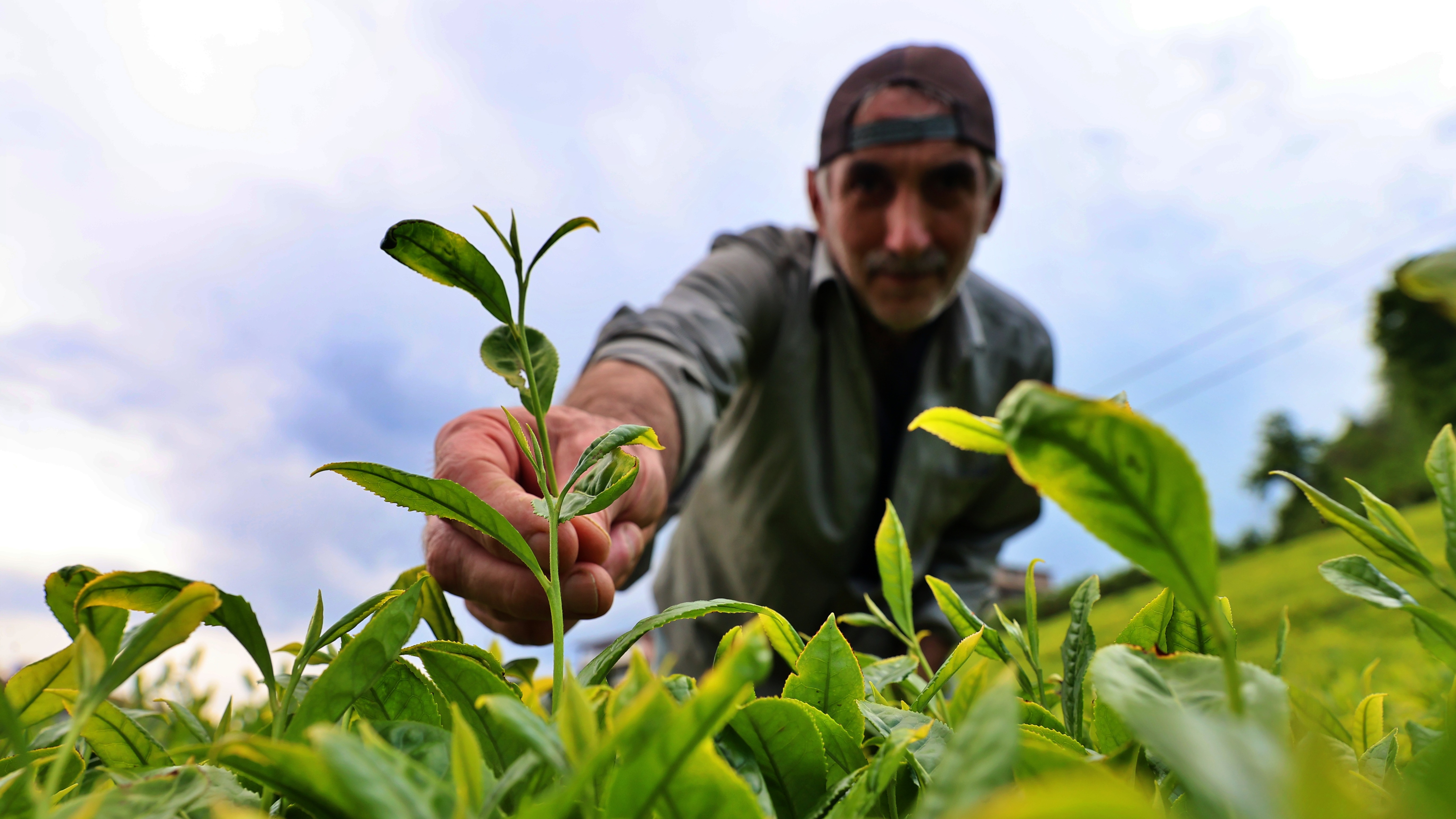
Vesile Karakas, 71, has been cultivating tea in Rize since 1971 and remembers well what life looked like before the crop took hold.
"Before tea, there was corn, hazelnuts, fruit etc.," she said. "But once tea arrived, we abandoned all of that. We turned entirely to tea."
Her family was among the last in their community to make the switch. Before that, livestock were the safety net. "We always had animals. We used to raise livestock. When times were tight, we'd sell one."
When they finally planted tea, the transformation was complete. "We got rid of all our animals. Tea brought real comfort to our lives."
That comfort did not come easily. According to Derinbay, in the late 1930s, Turkish officials including Zihni Derin and Asim Zihnioglu traveled “from one village to another, one person to another, to persuade these people to engage with tea agriculture.”
Their efforts took hold. By the late 1930s and in the 1940s tea cultivation began to stabilize. The first state tea company opened in 1947. Production expanded significantly through the 1950s and beyond.
The industry those officials built from scratch now spans roughly 810,000 hectares across the Eastern Black Sea region, supporting approximately 209,000 farmers — nearly all of them small, family-run operations, according to Türkiye’s Ministry of Agriculture and Forestry.
In 2024, Türkiye produced about 1.4 million tons of fresh tea leaves, according to the Turkish Statistical Institute. Most of it is consumed domestically.
Today Türkiye is the fourth-largest producer of tea, ahead of Sri Lanka, according to the Tea and Coffee Trade Journal.
Tea is Türkiye’s most beloved drink and the most widely consumed beverage after water. In fact, 96% of the population drinks tea every day, and 245 million cups are consumed daily nationwide, according to the Tea Research and Application Center (CAYMER).
Gradually, tea replaced coffee as the everyday drink.
Tunc describes her relationship with tea without any romantic framing. "Addiction," she says, when asked what tea means to her. "If cigarettes are an addiction, then tea is too. On days I don't drink tea, I feel awful. I get headaches."
But she also sees tea as something more social than individual. "Tea is an inseparable part of Turkish identity. Absolutely," she said. "Tea loves crowds. And we are a crowded society. Coffee you drink alone."
Derinbay echoes that sense of communal ritual. "Whenever you invite someone else to your house," she said, "since it is already brewing there in large quantities, you immediately offer your guest Turkish tea."
Although, the younger generations are drawn to third-wave coffee shops and experimental brewing, tea culture is also diversifying, with new tea shops, green tea, oolong tea, matcha and bubble tea gaining visibility.
“What we see is diversification and individualization. Both beverages are evolving and adapting to global influences, and while maintaining their local meanings,” says Derinbay