James Tasamba
06 August 2026•Update: 06 August 2026
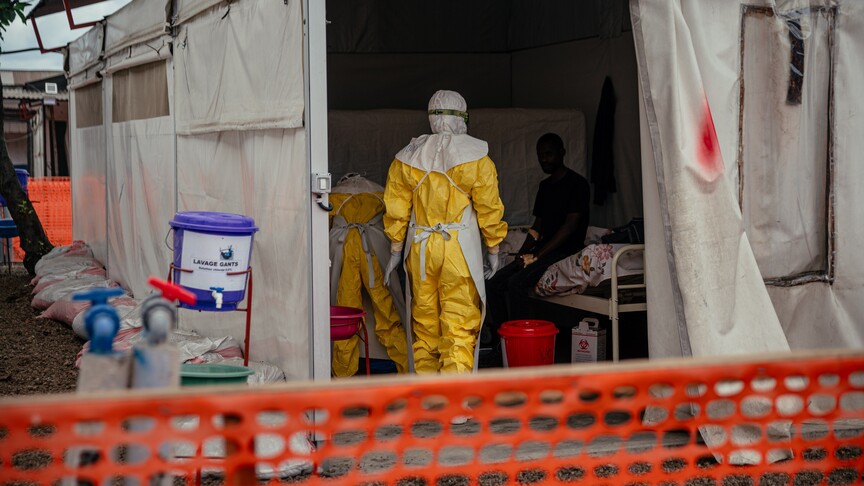
The World Health Organization (WHO) said Thursday that it had agreed with other response partners to jointly implement a shared strategy to stop the escalating Ebola outbreak in the Democratic Republic of Congo.
The latest Ebola outbreak in Congo has become the world’s second-largest by recorded infections.
Congo has reported 3,973 cases, including 1,801 deaths, since the outbreak was declared in mid-May, according to the latest Health Ministry situation report.
“We agreed on the need to adapt the response to the speed and trajectory of the outbreak, strengthen coordination under the DRC government’s leadership, and ensure that all partners work together to implement our shared strategy to stop this outbreak,” WHO Director-General Tedros Ghebreyesus said in a post on US social media company X.
Tedros, who arrived in Congo this week for the second time since the outbreak began, added: “We agreed on the need to strengthen collaboration across the Ebola response and wider humanitarian efforts.”
The epidemic has affected 51 health zones across five provinces: Haut-Uele, Ituri, North Kivu, South Kivu and Tshopo.
Ituri remains the main epicenter, accounting for 87.1% of cumulative cases.
The WHO, together with officials from the Africa Centres for Disease Control and Prevention (Africa CDC) and other partners, held a meeting Wednesday with Congolese leaders and response partners in Kinshasa.
The meeting highlighted the need to continue protecting and supporting frontline health and community workers, including by providing adequate personal protective equipment and compensating them for their work.
Tedros said the WHO would continue working alongside the Congolese government, Africa CDC and other partners to ensure that the response matched the scale and urgency of the emergency.
The continental Ebola outbreak response and preparedness plan requires $1.4 billion, according to Africa CDC.
Africa CDC Director-General Jean Kaseya said more than $420 million had already been mobilized to contain the outbreak.
He added that, under the leadership of the Congolese government, partners were intensifying early detection, contact tracing, access to quality care and engagement with communities.
Meanwhile, Congolese authorities on Wednesday intercepted a boat carrying about 200 people toward the capital Kinshasa following a suspicious death potentially linked to the Ebola virus, local media reported.
The boat was intercepted about 65 kilometers (40 miles) from the capital while traveling from Tshopo province, one of the provinces affected by Ebola.
Health authorities said a mobile laboratory had been deployed to screen all passengers aboard the boat.