- Esra Karatas Alpay is a freelance journalist.
- Fallout from the Sumud Flotilla is likely to shape global debate for years to come -- not only over Gaza itself, but over the limits of military power, accountability under international law, and the protection of civilians
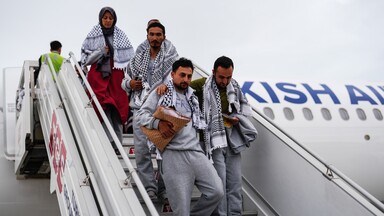
Three aircraft operated by Turkish Airlines landed at Istanbul Airport yesterday, carrying activists from the Global Sumud Flotilla who had been detained by Israeli military forces in international waters while attempting to deliver humanitarian aid to the Gaza Strip.
The 422 activists -- including 85 Turkish citizens -- were welcomed by relatives, officials, and supporters upon arrival in Istanbul. Several injured passengers, some wounded by gunfire and severe physical assault, were transferred directly to hospitals by ambulance for urgent medical treatment. Their return marked not only the end of a humanitarian mission but also the latest escalation in the growing international confrontation over Israel’s blockade policy on Gaza.
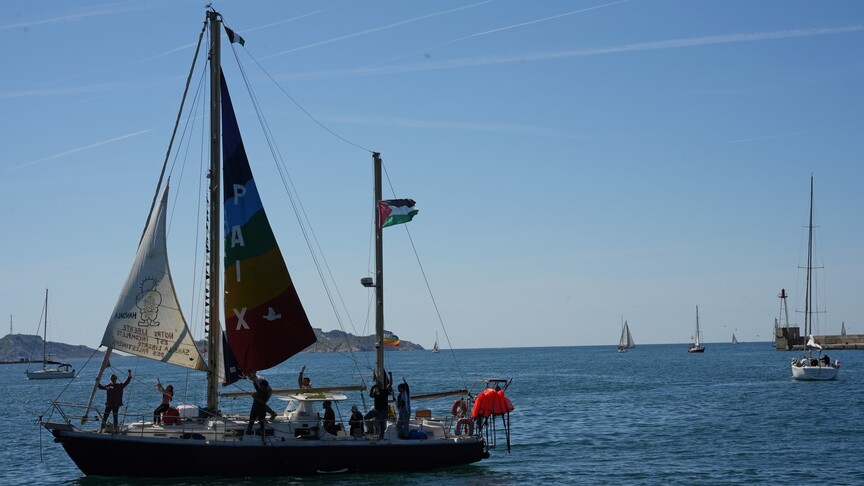
The flotilla, consisting of civilian activists from nearly 40 countries across six continents, had set sail with the declared aim of breaking the blockade and delivering urgently needed humanitarian supplies. Instead, the convoy was attacked by the Israeli military in international waters, leading to the unlawful detention of all those on board and provoking widespread diplomatic backlash.
History of repeated attacks in international waters
This was not the first military attack against the Global Sumud Flotilla. On April 29, the Israeli military attacked part of the mission, roughly 600 nautical miles away from Gaza, detaining 177 activists who later acknowledged mistreatment while in captivity. A second Sumud Flotilla followed on May 18, when Israeli military forces attacked a convoy of 50 vessels carrying 428 activists from 44 countries, including Turkish citizens, as the flotilla sailed toward Gaza through international waters. All the attacks and kidnappings by the Israeli military were clear violations of maritime and humanitarian law.
The repeated targeting of humanitarian missions has inevitably revived memories of the Mavi Marmara Flotilla attack in 2010, when Israeli commandos raided a Gaza-bound aid vessel, shooting and killing Turkish activists, inflicting deep wounds on Turkish-Israeli relations. For many in Türkiye and beyond, the Sumud Flotilla reflects a continuation of that same pattern: military aggression against unarmed peaceful civilian missions attempting to deliver food, medicine, and aid to Gaza, where the suffering and attacks are ongoing due to the blockade imposed by Israel.
Upon their arrival in Istanbul, injured activists were referred to hospitals for treatment. Officials stated that testimonies, medical reports, and documented evidence would be compiled and submitted to international judicial institutions, including the International Court of Justice, to ensure accountability for violations of international law.
Speaking to reporters, Omer Celik, spokesperson for Türkiye’s ruling AK Party, described the flotilla as “a fleet of humanity,” as the activists had acted “in the name of human dignity” against the “genocide” in Gaza. His remarks reflect Ankara’s view of the humanitarian crisis and acknowledge that the flotilla is a reflection of a wider global civil movement against atrocity.
International outrage and diplomatic protests
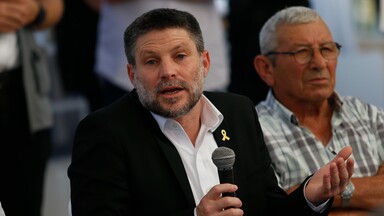
International outrage intensified after Israel’s National Security Minister Itamar Ben-Gvir shared footage allegedly showing the mistreatment of detained activists. The video generated strong reactions worldwide and further provided evidence that Israel had used disproportionate force against civilians engaged in humanitarian action.
Several countries -- including Spain, Canada, the Netherlands, France, Italy, and Belgium -- summoned Israeli ambassadors and diplomatic representatives to formally protest the incident. Human rights organizations and legal advocacy groups likewise condemned the intervention as disproportionate and unlawful, arguing that military operations against civilian vessels in international waters violate established humanitarian and maritime law.
However, such interventions may be strengthening rather than weakening global solidarity movements for Gaza. Each attack transforms relatively small humanitarian missions into major international events, drawing wider attention to the humanitarian crisis and mobilizing activists across continents. The multinational composition of the Sumud Flotilla demonstrates how the Palestinian cause has evolved into a global civil cause extending far beyond the region.
The confrontation is unfolding amid an already catastrophic humanitarian situation in Gaza, where approximately 2.4 million Palestinians continue to face severe shortages of food, medicine, and basic infrastructure after months of military attacks. Tens of thousands of civilians -- the overwhelming majority of whom are women and children -- have been killed or injured, intensifying global pressure for unrestricted humanitarian access.
Ultimately, the Israeli military attacks on the Sumud Flotilla have become a powerful symbol of the broader onslaught in Gaza -- one that is now at the intersection of humanitarian activism, international law, and geopolitical struggle. The repeated targeting of peaceful civilian aid missions in international waters, echoing the memory of the Mavi Marmara attack in 2010, has reinforced growing global accusations that the law is being systematically disregarded with impunity.
The flotilla has become emblematic of a growing global awareness and an expanding humanitarian movement whose initial demand is simple: the unrestricted delivery of aid to Gaza. Whether through diplomatic pressure, international legal proceedings, or the continued mobilization of transnational solidarity networks, the fallout from the Sumud Flotilla is likely to shape global debate for years to come -- not only over Gaza itself, but over the limits of military power, accountability under international law, and the protection of civilians amid attacks on humanitarian action on land or in international waters.
*Opinions expressed in this article are the author's own and do not necessarily reflect the editorial policy of Anadolu.