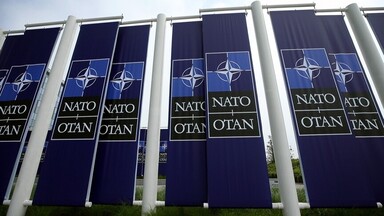
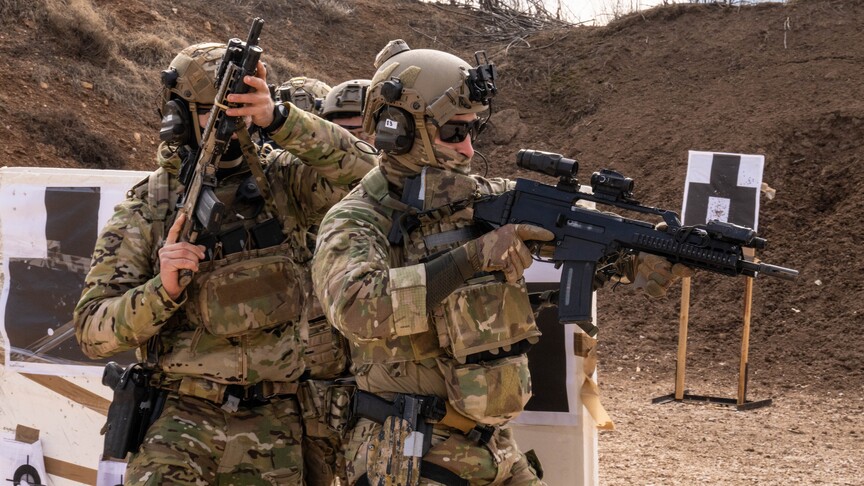
In 1967, NATO found itself asking a question that has returned to Europe today: can security rest on military strength alone? The answer that emerged from the Harmel Report was no. The alliance needed credible defense, but it also needed channels through which confrontation could be managed. Security, in other words, had two pillars.
More than half a century later, Europe is rediscovering the first pillar. Since February 2022, European states have taken significant steps to strengthen their defense capabilities and support Kyiv. These measures were necessary and they will remain so. But they are also taking place in a changing strategic environment. Washington will reduce its presence in Europe in the years ahead. The latest US National Security Strategy states that Europe should be enabled “to stand on its own feet” and take “primary responsibility for its own defense.”
For Europe, this means that the oft-invoked goal of strategic autonomy needs to be pursued further. I argue that strategic autonomy cannot rely on assuring deterrence alone. If Europe is to stand more firmly on its own feet, it must recover the broader understanding of security that Harmel captured in 1967. A more capable Europe needs stronger armed forces and a stronger defense-industrial base. It also needs stronger diplomacy and outreach.
As we know, history does not repeat itself, but it often rhymes. Therefore, the years in which the Harmel doctrine emerged in European strategic thinking are still instructive today. In the mid-1960s, the future of NATO appeared less certain than it does in retrospect. There were unfounded but real fears that the alliance might cease to exist. Article 13 of the Washington Treaty, NATO’s founding document, allowed any member to leave the alliance after the treaty had been in force for 20 years, provided it gave one year’s notice to the government of the United States. This raised the question of how secure the future of the alliance was and how Europe should organize its own security.
That question was sharpened by France’s decision in March 1966. Under Charles de Gaulle, France announced that it would withdraw from NATO’s integrated military command structure.
The debate touched the core of European security policy. Should security be preserved by holding the alliance together, or would a more stable European order require moving beyond military blocs altogether? British Foreign Secretary Michael Stewart captured this tension in June 1966. The task, he argued, was to ensure “that our alliance holds firmly together,” while at the same time seeking “better understanding between East and West.”
This dual logic of deterrence and detente would be codified in the Harmel Report one year later as the Harmel Doctrine, shaping Western security policy with Moscow for decades to come. As the report made clear, military strength and political engagement can reinforce one another when they serve the same purpose: limiting risks and keeping the possibility open of moving towards a more stable security order.
At a NATO defense ministers’ meeting in February 2026, US Under Secretary of Defense for Policy Elbridge Colby spoke of a “NATO 3.0.” Europe, he argued, would have to assume greater responsibility for its conventional defense. But he also warned against narrowing the debate too far: “Nor, I should stress, does it necessitate a one-sided focus on military strength alone.” From Washington comes a reminder that European security cannot focus on deterrence alone. It also needs a cooperative approach. It is notable that Colby makes an explicit reference to Harmel.
The NATO Double-Track Decision from 1979 shows what this meant in practice. It combined the readiness to deploy new weapons with an offer to negotiate arms control. In a joint statement in 1981, Ronald Reagan and Helmut Schmidt affirmed: “Together with deterrence and defense, arms control and disarmament are integral parts of alliance security policy.” Here, too, the same logic was at work: deterrence and dialogue had to be considered together if conflicting interests were to be contained and made negotiable in the first place.
The war against Ukraine has destroyed trust and violated the central principles of the European security order. European strategy must therefore rest on clear-eyed assumptions: It is highly likely that European security will remain marked by confrontation and deterrence for years, if not decades, to come. The challenge will therefore lie in managing deterrence, managing an environment of distrust, and managing a 5,000-km-long line of contact between Russia and the West, if only to prevent inadvertent escalation in the air, at sea, or on land. Crisis communication channels will need to be reinvigorated, mechanisms to prevent and manage incidents established, and, in short, military risk management measures agreed upon.
Here lies the contemporary relevance of the Harmel logic of 1967. It shows that deterrence and dialogue are different pillars supporting the same security order.
For this cooperative layer, the OSCE could again serve as a dialogue and negotiation platform. As the only pan-European security organization, the OSCE brings North America, Europe, Russia, Ukraine and Central Asia together within a single institutional framework. Should a political window of opportunity open, likely in connection with the end of hostilities in Ukraine, the OSCE, as a platform for dialogue and its instruments to manage conflict and build trust, could become useful again. Europe must use elements of cooperative security to manage confrontation and, however illusory it may sound to some, to keep political pathways open for rebuilding an inclusive European security order, building on credible deterrence.
*Opinions expressed in this article are the author's own and do not necessarily reflect the editorial policy of Anadolu.
news_share_descriptionsubscription_contact