
Anadolu Ajansı © 2026


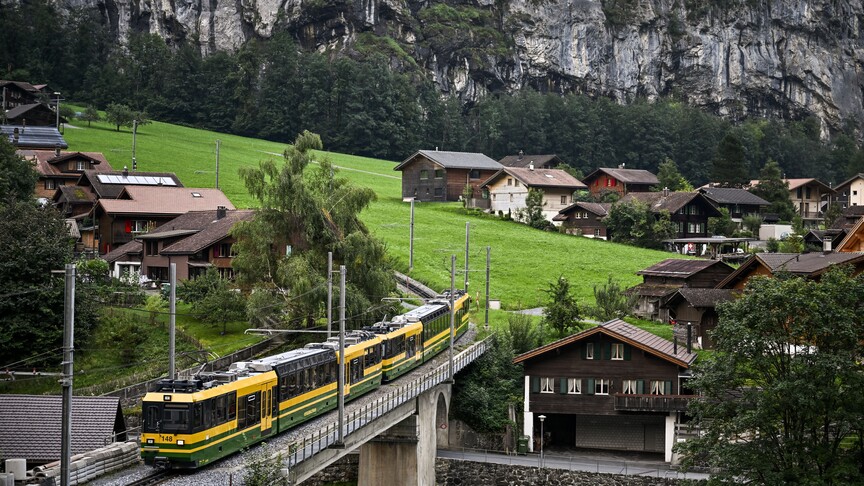
When Swiss voters head to the polls on June 14 to decide whether to cap the country's population at 10 million, they will also be weighing the future of an economy increasingly reliant on foreign workers.
The proposal, known as the Sustainability Initiative and backed by the Swiss People's Party, seeks to prevent Switzerland's permanent resident population from exceeding 10 million before 2050. Supporters argue rapid population growth has worsened housing shortages, strained transport networks, and increased pressure on public services.
The debate comes as Switzerland's population has grown from 7.3 million in 2002 to 9.1 million in 2025, an increase of nearly 25%, according to official figures.
Opponents, including the Federal Council, parliament, business groups, and labor unions, warn that limiting immigration could deepen labor shortages in sectors already struggling to recruit staff.
According to the Federal Statistical Office (FSO), 1.87 million foreign nationals were employed in Switzerland in the first quarter of 2026, with around four out of five coming from EU or European Free Trade Association (EFTA) countries or the UK, while third-country nationals made up the remaining.
Employment remains the primary driver of immigration. FSO data show that 53.4% of people who joined Switzerland's permanent resident foreign population in 2025 did so for work-related reasons.
The role of foreign workers in the Swiss economy has grown steadily over the past decades. The share of foreign nationals among the employed population increased from 25.6% in 1991 to 34.9% in 2025, according to FSO data.
The latest available FSO data also illustrate how deeply foreign labor is embedded across key sectors of the economy. Foreign nationals accounted for more than half of workers in accommodation and food services in 2025, while they represented more than a third of workers in construction and administrative and support services.
In absolute terms, the largest numbers of foreign workers were employed in manufacturing, extractive industries, and other activities, which counted 208,000 foreign workers in 2025, followed by human healthcare and social services with 189,000 and commerce, repair of motor vehicles, and motorcycles with 161,000. The figures highlight the broad role foreign labor plays across sectors ranging from industry and healthcare to construction and hospitality.
Healthcare offers perhaps the clearest example of that dependence. According to the latest available FSO data, foreign nationals accounted for roughly one-quarter of workers in human health and social work activities in 2025.
That share rises significantly when looking only at doctors. According to the Swiss Medical Association, foreign-trained physicians accounted for 43% of Switzerland's medical workforce in 2025.
The association has warned that Switzerland remains heavily dependent on foreign-trained doctors because it does not train enough physicians domestically to replace its workforce.
It also noted that one in four doctors practicing in the country is aged 60 or older, raising concerns about a looming wave of retirements as healthcare demand continues to grow.
Supporters of the initiative argue that continued population growth carries its own costs.
They say Switzerland's infrastructure is struggling to keep pace with demographic expansion, pointing to rising housing costs, crowded public transport, and increasing pressure on schools and healthcare services.
Housing concerns have become a central issue in the campaign. According to the Federal Statistical Office, Switzerland's housing vacancy rate fell to 1% in 2025, marking the fifth consecutive annual decline. The number of vacant dwellings fell 6.8% year-on-year to 48,455, underscoring the tightness of the housing market.
In economically dynamic regions, shortages of available housing and rising rents have fueled concerns that population growth is outpacing infrastructure development.
The "No to ten million Switzerland" initiative would require authorities to begin taking action before the country reaches the proposed population ceiling. If the permanent resident population exceeds 9.5 million before 2050, the government and parliament would be required to introduce measures aimed at curbing further growth, particularly in areas such as asylum and family reunification.
The proposal would also oblige Switzerland to seek exemptions or safeguard clauses in international agreements that contribute to population growth. If the population nevertheless surpasses 10 million, Switzerland could ultimately be required to withdraw from agreements linked to immigration, including its free movement accord with the EU.
If approved, the proposal would effectively leave room for roughly 900,000 additional residents before Switzerland reaches the threshold, equivalent to average annual population growth of around 35,000 people -- the room for maneuver could be slightly greater due to a decline in the birth rate.
The Federal Council argues that the initiative could have consequences extending well beyond migration policy. It warns that efforts to enforce the population cap could ultimately affect Switzerland's agreement on the free movement of persons with the EU, a cornerstone of the country's bilateral relationship with the bloc.
Officials also caution that changes to the agreement could jeopardize other accords linked to the bilateral framework, potentially affecting trade, security, and asylum cooperation.
The government, cantons, and social partners further argue that restricting access to workers from the EU and EFTA countries could exacerbate labor shortages, making it more difficult for businesses, hospitals, and public institutions to recruit staff.
Recent opinion polls suggest the initiative's early momentum may be fading.
A Tamedia/20 Minutes survey published in April found 52% support for the proposal among decided voters, while 46% rejected.
A first SRG SSR (Swiss public broadcasting association) poll conducted between April 20 and May 3 found voters evenly divided, with 47% in favor and 47% opposed.
More recent surveys have shown a shift toward the "No" camp. A YouGov Switzerland poll released on May 28 found 51% opposed, 43% in favor and 6% undecided.
A second SRG SSR survey published on June 3 found opposition had widened further, with 52% against the initiative, 45% in favor, and 3% undecided. Opposition has increased by five percentage points since its first survey.
Support for the proposal remains strongest among Swiss People's Party voters, while left-wing voters overwhelmingly oppose it. The poll found that voters in the political center have become increasingly critical of the initiative as the campaign has progressed.
Opposition was also stronger among women, highly educated voters, urban residents, and French-speaking Swiss. Swiss citizens living abroad were even more likely to reject the proposal, with 63% opposed and 33% in favor.
While the latest polling suggests voters are leaning toward rejecting the proposal, support remains substantial.
As voting day approaches, the referendum has become a test of two competing realities facing Switzerland: growing unease over the impact of a rapidly expanding population and the practical reliance of key sectors on workers from abroad.
news_share_descriptionsubscription_contact