Ekip
21 September 2015•Update: 22 September 2015
By Vasiliki Mitsiniotou
ATHENS
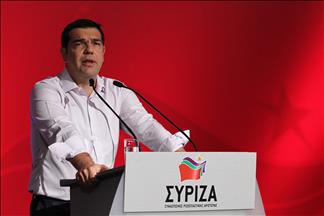
It has been considered victory for leftist Alexis Tsipras, back in power after Sunday’s decisive election results.
Obtaining a renewed mandate, his Syriza party will govern Greece along with its former parliament ally right-wing Independent Greeks.
According to results from the Interior Ministry, with 35.46 percent of the vote, Syriza secured 145 parliament seats outdoing right-wing New Democracy by 7 percentage points.
Syriza’s alliance with Independent Greeks who gained 10 seats allows Tsipras to cross the 151-seat threshold needed to form a majority coalition government.
Neofascist Golden Dawn was third with 6.99 percent of the vote, thus securing 18 parliament seats -- a gain since the last election. They were in turn followed by the Democratic Coalition with 6.28 percent and the communist party KKE at 5.55 percent. Potami follow with 4.09 percent and the Union of Centrists at 3.43 percent of the vote.
Popular Unity, the small group made up of Syriza defectors, failed to gain a large enough percentage to secure any seats at all.
Forty-one-year-old Alexis Tsipras triggered this latest election by resigning in August, barely seven months into his four-year term. His short-term initial government was marked by painful negotiations with European creditors, capital controls and a referendum in July.
This new vote ensures that Tsipras will remain Greece's dominant political figure on the third time that Greeks had to vote this year. He will now begin another four-year term in office.
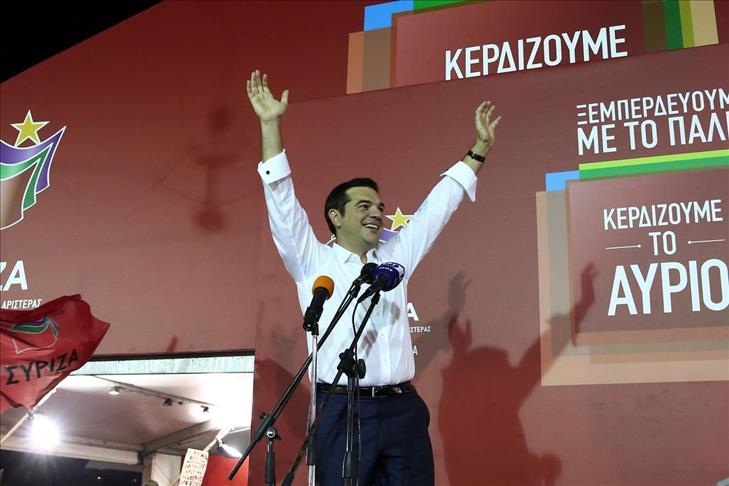
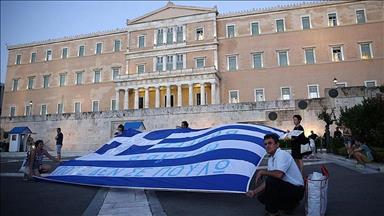
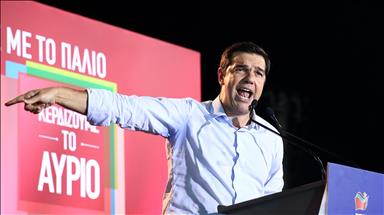
In a victory speech to cheering crowds in Klafthmonos Square, in Athens, Tsipras said he was joining forces once again with Panos Kammenos, leader of the right-wing Independent Greeks. He promised a new phase of stability in the troubled country, but also warned of the difficulties that lie ahead.
Tsipras’ victory is seen as a huge triumph by many especially considering the election fatigue and general disillusionment of the population engendered by the third bailout deal and harsh austerity measures.
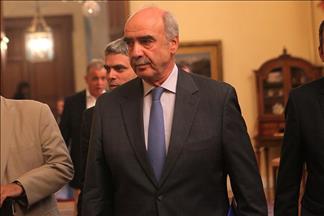
Head of the main opposition New Democracy, Vangelis Meimarakis, conceded defeat and called for a government to be formed quickly.
“We fought the election battle with seriousness and dignity,” Meimarakis said.
Neofascist Golden Dawn party leader Nikos Michaloliakos said GD’s “victory” was particularly significant, saying the party "had an entire system against us” in his statement following the first results.
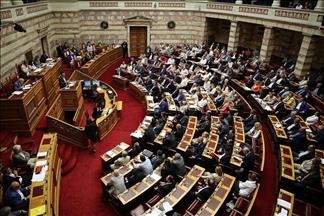
With a total of eight parties entering the parliament, Greeks await for their new government to be announced and things to move onwards in the next three days.
Lilian Markatatou, a 32-year-old philologist in Thessaloniki, was happy with the election results. “I wanted to give Syriza a second chance”, she said. “I think they did their best negotiating and now we have to move forward.”
Giannis Galanis, a 37-year-old sales manager who is currently unemployed, partly agreed.
“In reality, we have to implement the bailout agreement and get it over with,” he said. He had hoped for a government of national unity because that way “all parties would take responsibility and our creditors would have a credible interlocutor."
This sentiment echoed that of certain European leaders. Jeroen Dijsselbloem, the Dutch head of the Eurogroup, said he looked forward to the swift formation of a new Greek government with a mandate to implement the bailout.
“[We are] ready to work closely with the Greek authorities and to continue accompanying Greece in its ambitious reform efforts," Dijsselbloem tweeted.
The new government must oversee a critical bank recapitalization program and prepare for the creditor’s review progress of reforms next month.
Tsipras’s government will also have to draft the 2016 state budget, overhaul a series of reforms concerning the pension system, implement a series of tax reforms, and carry out the strongly opposed privatization sales of public infrastructure.
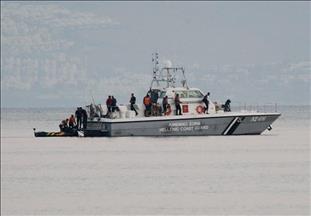
Tsipras will also need to find a way to deal with Greece's role in Europe's refugee crisis, as the main entry point for tens of thousands of refugees who arrive every month. He will meet with EU colleagues at an emergency summit over the crisis on Wednesday.