Merve Aydogan
14 May 2026•Update: 14 May 2026
The US announced Thursday an additional $1.8 billion in humanitarian funding to support UN-led relief efforts around the world.
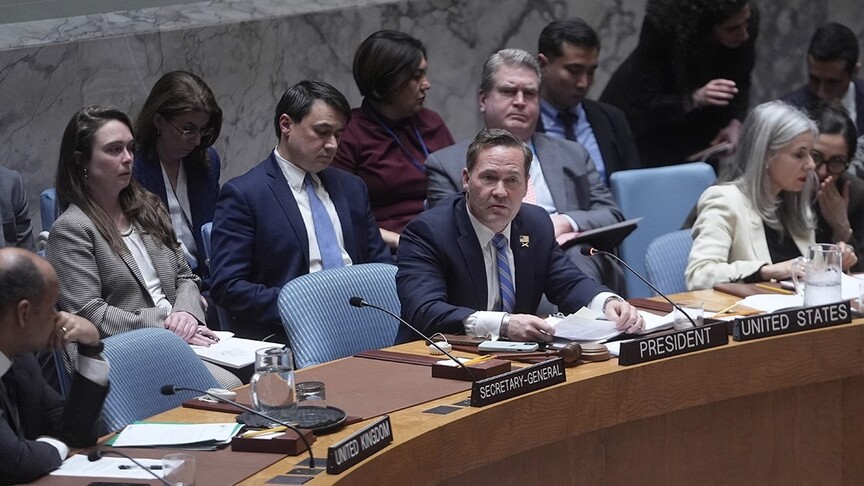
Speaking at a news conference, US envoy to the UN Mike Waltz said the funding would support humanitarian operations while advancing reforms focused on accountability and efficiency.
"We are thrilled today, again with (US State Department) Under Secretary (Jeremy) Lewin and Under Secretary General (Tom) Fletcher, to announce an additional 1.8 billion in humanitarian funding," Waltz said.
"These funds will save more lives around the world but also drive forward the reforms that we put in place for efficiency, accountability, and lasting impact," he added.
Waltz also pledged to continue efforts. "We still have a lot of work to do," he said. "Our burden-sharing has increased, but duplication and inefficiencies have decreased.”
Lewin argued that the previous US funding system for the UN did not work "for the United States and our taxpayers."
He also emphasized that "the UN and the United States are different entities, and we have different constituencies."
"The United States has a long history of being the most generous nation in the world. But what happened was, over a long period of time, we funded an inordinate amount of the humanitarian sector, more than 40%," he argued.
Lewin claimed that the US funding for the UN "wasn't actually reaching the people in the field," as he accused it of being "diverted to terrorist organizations."
But he hailed the Office for the Coordination of Humanitarian Affairs (OCHA) for adapting and reforming into the US-backed system of funding. "It's reformed in a way that you know, honestly, has been very impressive to the United States, and we want to continue to hold Tom (Fletcher) accountable for that," he added.
Fletcher, the UN relief chief, welcomed the funding by the US. "It makes the US our single-largest national donor."
"This allocation will allow us to accelerate and expand on the progress made," he said, adding that the next phase is to "secure the rest of the funding" for the remainder of the year.
"We need to deliver this ambitious plan, and then to get out there and deliver it, and to come back to you at the end of the year and ask you to hold us to account for what we've done and the choices we've made," he said.
In a written statement, Fletcher shared a link to a dashboard allowing tracking of the allocation of US funding, "in the interest of transparency and trust."
Noting the "exceptionally" rough times for humanitarians, he said, "We are overstretched, under‑resourced, and increasingly under attack."
"Yet we have shown that we can deliver -- even under the most challenging conditions," he said, adding that the latest funding "builds on the urgent action already taken this year and will allow us to accelerate and expand that progress, protecting millions more lives when it matters most."
In a statement by his spokesperson, UN Secretary-General Antonio Guterres welcomed the announcement, saying the funding "will allow humanitarians to reach millions of people in the most urgent crises with lifesaving support."