
In the pale light of a spring morning, the Hokersar wetland on the outskirts of Srinagar city in Indian-administered Kashmir slowly stirs awake.
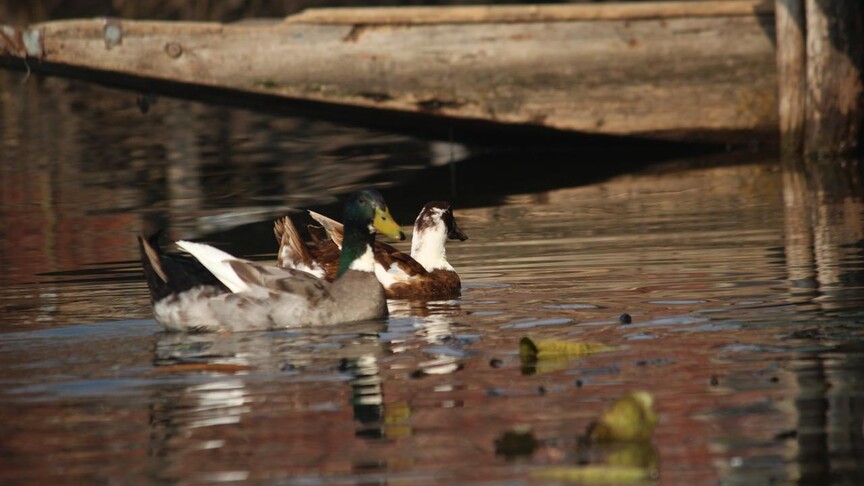
Flocks of coots drift across reed-lined waters while some ducks flash briefly from a willow thicket before disappearing into the marsh.
Along a muddy embankment, young birdwatchers stand silently with binoculars and long-lens cameras, waiting for the first movement of migratory ducks.
Among them is Reyan Sofi, a 30-year-old birder who recently documented the breeding of the ferruginous duck in Kashmir for the first time. The species is native to parts of Central and Eastern Europe and Asia.
“This means they are adapting here; the conditions are suiting them,” Sofi said.
A decade ago, birdwatching in Kashmir remained largely confined to wildlife officials, visiting bird experts, and a small circle of enthusiasts.
Today, however, the Himalayan region is witnessing the rapid rise of a birding culture driven by social media, citizen science and growing environmental awareness.
From the wetlands of Srinagar to the forests of Dachigam National Park – home to the endangered Kashmir stag, or hangul – amateur birders are documenting species, reporting poaching incidents and contributing data to global scientific platforms.
“I have documented at least 399 bird species since 2016, when I started birding,” Sofi said.
Conservationists say the movement is helping fill long-standing gaps in ecological research in Kashmir, where decades of political instability hindered sustained environmental documentation.
“Birding groups are greatly supporting bird conservation. They act as pressure groups and also contribute valuable data on citizen science platforms,” said Intesar Suhail, a wildlife warden and bird expert.
Many birders now upload sightings to global databases such as eBird and contribute observations to journals including Indian Birds and the Journal of the Bombay Natural History Society.
“These observations have become increasingly valuable for understanding migration patterns, habitat use and climate-related ecological changes,” Suhail told Anadolu.
At least eight to 10 active birdwatching groups now operate across Kashmir through social media platforms, organizing field visits and documenting species.
These groups gained momentum after the COVID-19 pandemic, when many residents turned to nature during lockdowns.
“During lockdowns, many residents began exploring nearby wetlands, orchards and forests to feel good,” said Mohammad Maqbool Baba, a forest official in the region.
Baba said the trend has strengthened citizen science and environmental awareness.
A 2023 study published in iScience, which surveyed birdwatchers across 50 countries, found the pandemic significantly increased engagement with local birding and deepened emotional connections with nearby ecosystems.
Separate studies in Scientific Reports linked interactions with birds and green spaces to lower anxiety and depression levels.
“Birdwatching is one of the best calming experiences one can have,” said clinical psychologist Isha Malik.
“The calmer your surroundings are, the better you will feel.”
In a region long shaped by conflict and uncertainty, many birders say the activity offers rare moments of peace.
“I started birding during the lockdown,” said Mueen Ahmad Malik, who has documented more than 200 bird species. “These spaces are stress busters and add value to life.”
Kashmir occupies a key position along the Central Asian Flyway, one of the world’s major migratory bird corridors.
Its wetlands and forests host hundreds of resident and migratory species, including gadwalls, pochards, raptors and high-altitude songbirds.
Wildlife officials estimate nearly 600 bird species have been recorded across Jammu and Kashmir.
Migration begins in late summer and continues year-round for different species. Winter migrants, particularly waterfowl, spend the colder months in Kashmir before returning north. Summer migrants arrive to breed.
Among the region’s most sought-after birds are the Kashmir flycatcher and the orange bullfinch, species with highly restricted breeding ranges that attract birders from across India and abroad.
Wetlands such as Hokersar, Shallabugh and Hygam become winter refuges for ducks, geese, grebes and waders escaping frozen northern habitats.
Between October and March, birders regularly encounter northern pintails, gadwalls, mallards, common teals, Eurasian wigeons and greylag geese across its marshes.
In 2023, birdwatchers documented what is believed to be the first sighting of the black-necked grebe at Hokersar, an internationally important wetland.
In 2025, local birders reported a sanderling sighting believed to be the first in Kashmir in more than a century.
As interest in birding grows, many enthusiasts are also becoming involved in conservation work.
A 2023 study published in Biological Conservation noted that citizen science platforms such as eBird now provide critical biodiversity data used globally for migration mapping, habitat monitoring and conservation planning.
For decades, bird work in Kashmir remained sporadic because of political instability and difficult terrain.
Birders equipped with cameras, smartphones and GPS tools are now helping bridge that gap.
“Many Indian and international bird groups are coming to Kashmir for birdwatching,” Sofi said. “I receive many messages from people asking me to guide them, and I happily do so.”
Scientists say the growing culture of bird documentation could prove increasingly important as climate change alters migratory behavior across the Himalayas.
Research by the Wildlife Institute of India and other ecological organizations suggests rising temperatures, shrinking wetlands and changing precipitation patterns are already affecting migratory bird distributions across South Asia.
The growth of birdwatching has also encouraged more women to participate.
A few years ago, 25-year-old Maleen Jan persuaded her professor to allow her to work on a project related to migratory birds in Kashmir.
She began observing birds around her neighborhood before connecting with local birding groups.
“At first it was very challenging, but gradually I became more involved,” Jan said. “I have documented more than 170 bird species.”
What began as academic research evolved into a passion, she said.
Despite its conservation benefits, wildlife officials warn that the rapid growth of wildlife photography and commercial bird tourism also carries risks.
Practices such as playback calls, baiting and intrusive photography near nesting sites are becoming increasingly common, potentially disturbing breeding behavior and stressing vulnerable species.
The Jammu and Kashmir Wildlife Department says it is promoting responsible birdwatching through awareness campaigns, guided tours and educational outreach programs in schools and universities.
“We need to be mature enough to understand that these spaces should not be disturbed,” Suhail said.
news_share_descriptionsubscription_contact