Merve Gül Aydoğan Ağlarcı
03 October 2026•Update: 03 October 2026
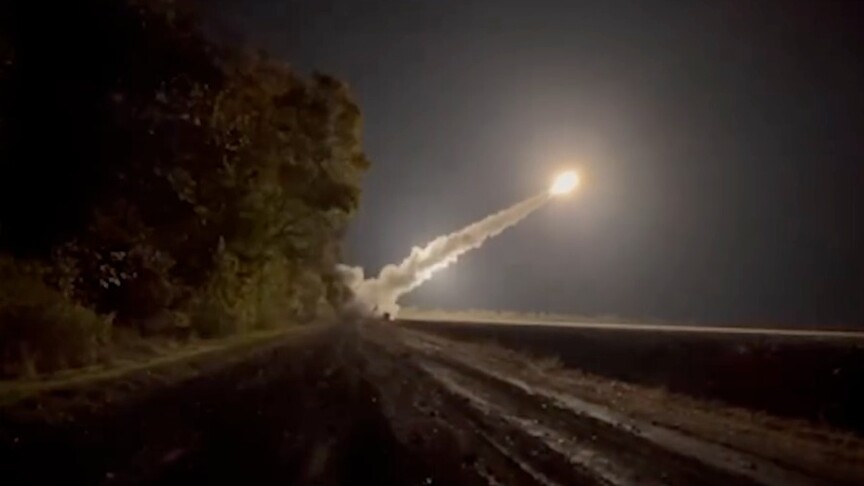
North Korea on Saturday launched an intermediate-range strategic missile capable of changing its flight trajectory at low altitude and using artificial intelligence technology during a firing drill off its east coast, state news agency KCNA reported.
Kim Yo Jong, the sister of North Korean leader Kim Jong Un, said her brother personally oversaw the drill.
She said South Korea and Japan tracked the missile, reporting flight distances of more than 700 kilometers (435 miles) and 680 km (423 miles), respectively, calling the figures "interesting numbers."
"We have already witnessed similar announcements four times and, finally, we came to the conclusion that the superiority of the special flight mode applied to the missiles in our possession has been verified in practice," Kim said.
She claimed that the "enemy" failed to track the targets from their initial skip points, when the wave-like trajectory mode was applied to missiles, adding that extension of the trajectory at the downward stage gives the numbers quite similar to the range numbers given.
"They should acknowledge the speed of the missile," she said, adding that "they would be well advised" to remember previous announcements that it is capable of "changing its flight orbit at a low altitude and AI was introduced into it."
"There is no way to avoid this attack," Kim said.
She added that representatives of the Missile Administration reported that it is possible to set at least four flight orbit modes according to a purpose and target with the technology recently introduced.
Kim Jong Un voiced belief that no other country in the world “could have access to such technology for at least several years," the statement said.
The move comes 13 days after Pyongyang test-fired a pair of short-range ballistic missiles from the Wonsan region on Sept. 20. The two launches took place within hours of each other, and were aimed at the East Sea.
"We are aware of the missile launch and are consulting closely with our allies and partners," the US military’s Pacific Command wrote on US social media X.
"Based on current assessments, this event does not pose an immediate threat to U.S. personnel or territory, or to our allies," it added, pledging to defend the US and its allies in the region.