Aziz Ahmadi and Serdar Dincel
12 September 2026•Update: 12 September 2026
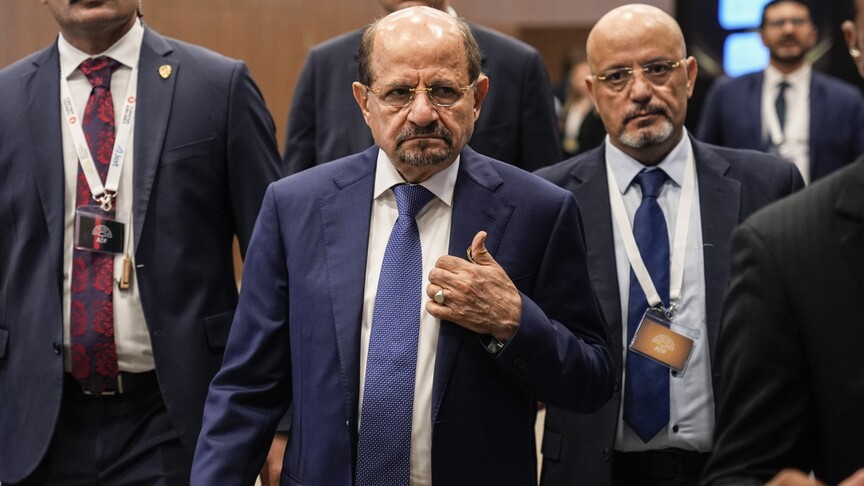
Yemeni Prime Minister Shaya al-Zindani said Saturday that the difficult developments on the ground witnessed by the country in recent days “do not mean the end of the confrontation or that its course has been decided.”
Battles “are not measured by the outcome of a single day or a change in position, but by the state’s ability to regain the initiative,” al-Zindani said during a Cabinet meeting held in the interim capital, Aden, to discuss the repercussions of the Houthi escalation, according to Yemen's state-run news agency Saba.
The agency said the Cabinet reviewed military operations and combat readiness, the humanitarian situation caused by the Houthi escalation and displacement, and government measures to mitigate its impact on citizens.
Al-Zindani reassured Yemeni citizens in various provinces that “the government is placing their security and safety at the top of its priorities.”
“The current escalation, despite its seriousness, will not disrupt the work of the state or create a vacuum that the Houthi militia and those behind it can exploit,” the prime minister stressed.
Al-Zindani’s remarks came after major shifts in the map of control in Yemen in recent days, as the Houthis announced that they had taken control of several districts in the western coastal provinces of Hodeidah and Taiz, as well as islands in the Red Sea, including Mayyun Island in the Bab el-Mandeb Strait.
Meanwhile, Yemeni government forces announced advances in Al-Jawf province, which borders Saudi Arabia, and said they were approaching Al-Hazm, the provincial capital.
They also reported carrying out retaliatory airstrikes on Houthi targets in and around Mocha and in areas of Taiz, Lahij and Al-Dhalea provinces, saying they had eliminated “large gatherings” of group members and destroyed military vehicles and weapons. They also said they had repelled a major attack on Marib.
Yemen had been under a relative lull since April 2022 after nearly 12 years of war between government forces, backed by a Saudi-led coalition, and the Iranian-backed Houthis, who seized control of the capital, Sanaa, and large parts of the country in 2014.
Since late 2023, after the Gaza war began, the Houthis have become increasingly involved in regional hostilities, launching attacks on Israel and commercial shipping in the Red Sea.