Mucahithan Avcioglu
06 October 2026•Update: 06 October 2026
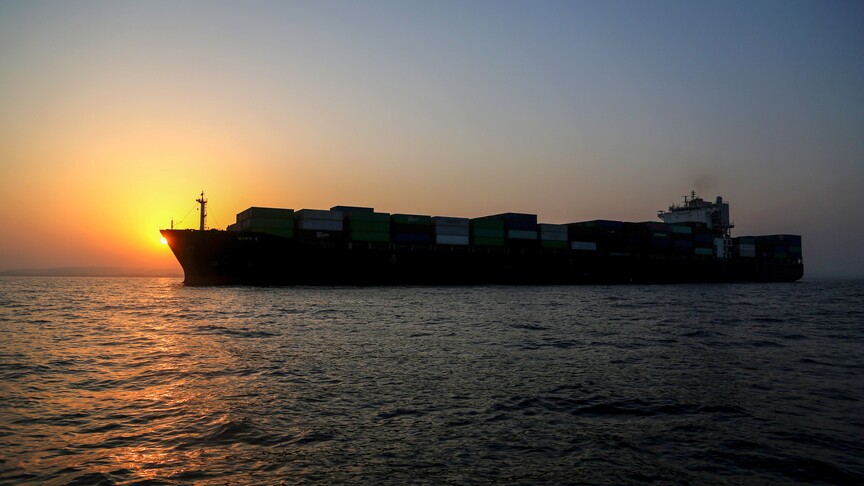
Attacks on tankers in and around the Strait of Hormuz have underscored continuing risks to energy shipping, while publicly available Baltic Exchange figures show elevated earnings for vessels carrying crude from the Gulf to China.
The UK Maritime Trade Operations (UKMTO) published alerts documenting at least eight attacks from Oct. 1 - 5 in and around the waterway, involving vessels struck by unidentified projectiles.
In an incident Monday, a tanker’s master reported a projectile strike that caused an engine-room fire. No casualties or environmental effect were reported at the time of the alert.
Separate reports described attacks on crude oil tankers and a liquefied petroleum gas carrier during the weekend.
UKMTO also reported that a tanker entering the strait Monday was contacted by Iran’s Islamic Revolutionary Guard Corps 11 nautical miles north of Khasab, Oman.
The vessel was instructed to turn back or face being targeted, and its master confirmed complying with the instruction, said the agency.
UKMTO did not identify who carried out the projectile strikes in the reviewed alerts. It said authorities were investigating and advised vessels to transit cautiously and report suspicious activity.
The Baltic Exchange’s Oct. 2 tanker report assessed daily round-trip time-charter-equivalent earnings on its Middle East Gulf-China route at $1,221,893 for a standard very large crude carrier.
The benchmark covers shipments of 270,000 metric tons of crude. It measures estimated daily vessel earnings after voyage expenses.
The exchange said the market strengthened again after easing earlier in the week, although the route’s freight assessment remained slightly below the previous week’s level.