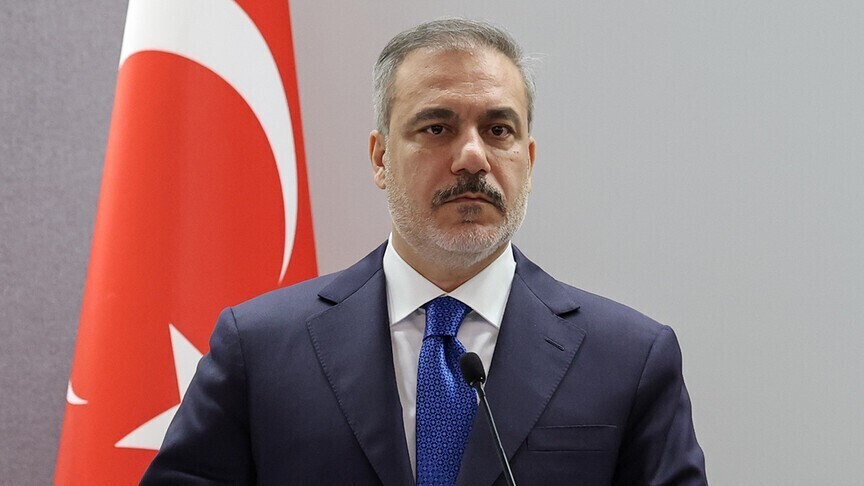
Turkish Foreign Minister Hakan Fidan said he believes both the US and Iran currently show “enough will” to stop the war and reach a lasting settlement, warning that renewed escalation would damage regional stability and the global economy.
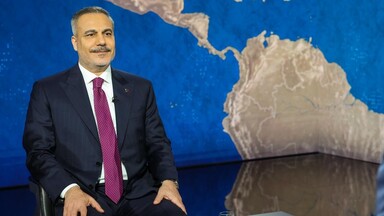
Speaking to Al Jazeera’s Resul Serdar in an interview aired Tuesday, Fidan said Türkiye’s immediate priority is ensuring that the ceasefire between the two sides continues to hold.
“Our most urgent concern is to see the ceasefire is holding actually. This is what we care about at the moment,” he said. “I think there is enough will now…on both sides to stop the war.”
“The alternative of the ceasefire is going back to war, which nobody would like to see that scenario again because right now, the entire world economy and energy security is suffering as a result of this war,” he added.
Fidan said everyone hopes to see a negotiated settlement ending the conflict, describing fluctuations in the talks as part of the normal course of diplomacy.
Referring to the latest disagreement between the sides, he said it should be viewed as part of the broader negotiation process and expressed confidence that talks would continue.
“The American side is rejecting what is being proposed, but there is always retailoring of the proposals, rewording,” he said.
“I think it's possible to come up with a new acceptable wording,” he added, noting that mediators and parties involved can revise proposals and positions during negotiations.
Türkiye-Qatar coordination, regional diplomacy
Fidan said Türkiye and Qatar have long coordinated on mediation efforts in regional crises.
“Our coordination on mediation affairs goes back to more than a decade,” he said. “Wherever there is a regional crisis, Turkish-Qatari coordination and joint effort is there.”
He said Ankara appreciates Qatar’s approach, adding that Qatari officials “are not after a credit” but “after a tangible result.”
Asked about the risks if diplomacy fails, Fidan said different scenarios could produce different consequences, including for energy, border security and refugee flows.
Energy security, Strait of Hormuz
On energy security, Fidan said Türkiye does not heavily rely on the Strait of Hormuz.
“There are three major pipelines bringing oil and gas to Türkiye from Central Asia -- from Iran, from Russia, from Azerbaijan,” he said. “Because we are not carrying our energy with ships.”
Fidan also stressed the importance of restoring free navigation in the Strait of Hormuz to pre-war conditions.
“We want to see a free passage of all the ships, just like it was happening before the war,” he said.
“The status quo before the war was what everybody was enjoying,” he added, warning that imposing a new arrangement without broad international acceptance could become “a new source of a new conflict.”
Asked about whether Türkiye could contribute to efforts such as demining in the Strait of Hormuz, Fidan said Ankara is not proposing a mechanism but responding to proposals being discussed.
He said Türkiye hopes Iran and the US will conclude their talks positively and reach an understanding.
Pakistan-led mediation process, regional consultations
The Turkish foreign minister said Türkiye has sought to contribute to mediation efforts since 2010 but noted that the current process is being “very well conducted” by Pakistan.
“Our job is together with other regional countries, including Qatar, to help them to really perform their best to mediate this very, very difficult task,” he said.
Fidan said Türkiye remains in contact with both sides as well as regional actors involved in the process.
‘Enough will’ to end war
Fidan said Iran and the US have been discussing the nuclear file for more than 20 years, adding that both sides had avoided a hot war until recently.
“I think they've seen the worst now, after engaging in war, a full-scale war between Iran and the United States with the provocation of Israel,” he said.
“So now I think there is nothing left by the sides to experience. So I think it is time to stop now, to find a real solution to this problem, which is affecting not only two respective countries, but also the entire globe,” he added.
Fidan warned that renewed fighting could lead to broader instability and deepen concerns over the global economy and energy security.
“It is prone to escalation. It is prone to further tragedy and drama and a negative effect for both the world economy and regional stability,” he said.
“All in all, we think that both sides can actually succeed in reaching a permanent settlement,” he added.
Syria, Ukraine and regional stabilization
On Syria and regional diplomacy, Fidan described trilateral contacts involving Türkiye, Syria and Ukraine as “a good meeting between three countries,” saying Ankara’s ties with both Damascus and Kyiv helped facilitate discussions on possible cooperation areas.
He also described Syria as “a success story” for the region, saying regional countries had adopted a coordinated approach toward Damascus and that stability in the country had improved significantly.
“The countries of the region came together and they identified a uniform position vis-a-vis Syria, and Syria responded to this position very successfully,” he said.
“Now Syria is a stable country, posing no threat to anybody, and all the refugees are coming back from different countries, including from Türkiye, and this is a big success,” he added.
Addressing challenges in Syria’s state-building process, Fidan said major progress had been achieved in unifying armed groups under a single command structure, while issues related to the YPG were still being addressed through an agreed roadmap.
Israel poses major threat to Syria’s stability
“But what is more worrying for all of us is the intention of Israel,” he said.
Fidan argued that Israeli actions in Syria should not primarily be viewed through the lens of Türkiye’s security concerns, but rather as a violation of Syria’s sovereignty and territorial integrity.
“It is violating a nation state called Syria, territory, integrity and sovereignty, and it's occupying it,” he said.
“So Israel should stop being a source of instability, wars, destruction and mass migration,” he added.