Jorge Antonio Rocha
24 April 2026•Update: 24 April 2026
Panama Canal transit fees have surged since the start of the conflict in the Middle East and the blockade of the Strait of Hormuz, said canal authorities on Thursday.
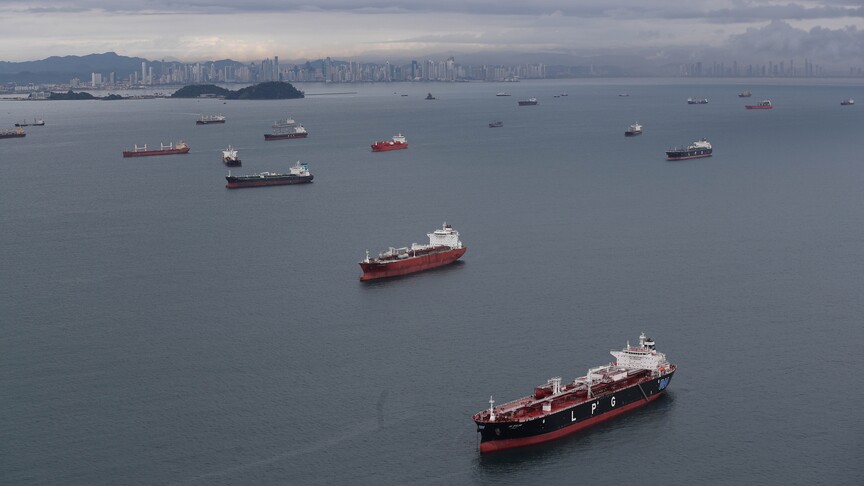
The war launched by the United States and Israel against Iran on Feb. 28 has not only taken a toll on global energy prices, but has also reshaped maritime routes, resulting in increased demand for the Panama Canal.
According to Victor Vial, the canal’s vice president of finance, the average price in an auction before the Middle East conflict was in the $135,000-$140,000 range. However, since the start of the conflict, during March and April, this average rose to as much as $385,000.
Ricaurte Vasquez Morales, the canal’s administrator, said the Panamanian government has stepped up efforts to keep the canal sustainable amid rising demand for transits and tonnage during the first half of fiscal year 2026.
“Amid all the geopolitical complications unfolding around the world, along with changes and various factors affecting international trade, the Panama Canal remains open and reliable. Especially at this moment, with water levels at an optimal level, we are accommodating an ever-growing volume of traffic,” he said.
From October 2025 to March 2026, 6,288 transits were recorded, representing a year-on-year increase of 224 transits. In total, 254 million PC/UMS tons (Panama Canal Universal Measurement System) passed through the canal.
According to canal authorities, this level of traffic has remained steady in recent months, averaging 34 vessels in January, 37 in March, and more recently, peak days exceeding 40 transits.
For those who do not book in advance, the canal offers options such as last-minute reservations and an auction system. Currently, between three and five slots are offered daily through auctions.